
The house has a bright kitchen, room for everyone and dates that fit your holiday plans. Its address appears on a map. Then the person answering your inquiry asks for a deposit through a different payment route. You have found evidence that a place exists. You still need to establish that this person can offer it, that your dates will be reserved and that the money is going to the right recipient.
That distinction matters when you cannot visit before booking. The Federal Reserve’s August 2026 vacation-rental guidance describes copied property listings, invented offers, manipulated or generated media and fake rental websites. A convincing photograph is not a reliable way to settle who controls the booking.
You do not need to become a property investigator for every trip. You need a practical stopping point before payment: the property, advertiser, reservation and payment recipient should fit together. If a material connection remains unexplained, pause the deposit instead of letting an appealing rental or a countdown make the decision for you.
Key Takeaways
- A real address and matching rental photographs do not establish the advertiser’s authority or your reservation.
- Check the property and the person or company offering it through routes you find independently.
- An advance deposit is not automatically a scam. An unexplained change in recipient or payment route needs an answer before you pay.
- Booking-platform protections depend on their terms and the actual transaction; they are not a universal refund promise.
- Save the listing, agreement, messages and payment reference. Match any recovery action to the money or information you actually shared.
- If you arrive and cannot access the rental, put safety and verified support ahead of another payment demand.
Why a convincing rental listing can still lead to the wrong person
Consider a hypothetical booking: a small holiday cottage appears on two websites. Both versions show the same front door and bedroom. One correspondent says the second listing is outdated and offers a discount if you reserve directly today. The agreement includes the correct address. None of those details, taken alone, answers whether that correspondent is entitled to rent the cottage for your dates.
Separate the questions. Does the property exist where the advertisement places it? Does the person answering have authority to offer it? Will your reservation be recorded with the company you think you are using? Does the recipient collecting the deposit belong to that arrangement? A reassuring answer to the first question cannot do the work of the other three.

Do not make the photo itself your main fraud test. Images can be copied, and an attractive image can accurately depict a property that the advertiser does not control. Looking for distorted hands, strange windows or another supposed sign of AI is a weaker decision rule than checking the address, business and booking route. A clean-looking picture does not close those gaps.
The same caution applies to reassuring details around the picture. A familiar business name can be copied. A professionally written agreement can describe the wrong transaction. Reviews can provide useful context, but they should not replace checking a surprising request. You are trying to connect the evidence, rather than collect a large number of things that look plausible.
This also keeps the process proportionate. A small owner-managed rental may have fewer reviews than a large hotel. A high holiday price may reflect demand, while a low price may be a legitimate offer. Treat a discrepancy as a question to resolve. Do not label a property fraudulent simply because it looks different from your usual booking experience.
Check the rental property beyond the advertisement
Search the address and compare what the results actually show
The FTC’s rental-listing advice recommends searching the address, checking for conflicting advertisements and researching the owner or company. For a vacation rental, it also advises getting the contract before sending a deposit and confirming the address. These checks are useful because they move you beyond the advertisement’s own claims.
Search the full address and the property or management name separately. Compare the type of accommodation, location and contact details. If another result appears to describe the same rental, do not immediately assume that one listing is false: a property can be marketed through different legitimate channels. Look for an unexplained conflict, such as a different claimed manager or a statement that the home is unavailable for short stays.
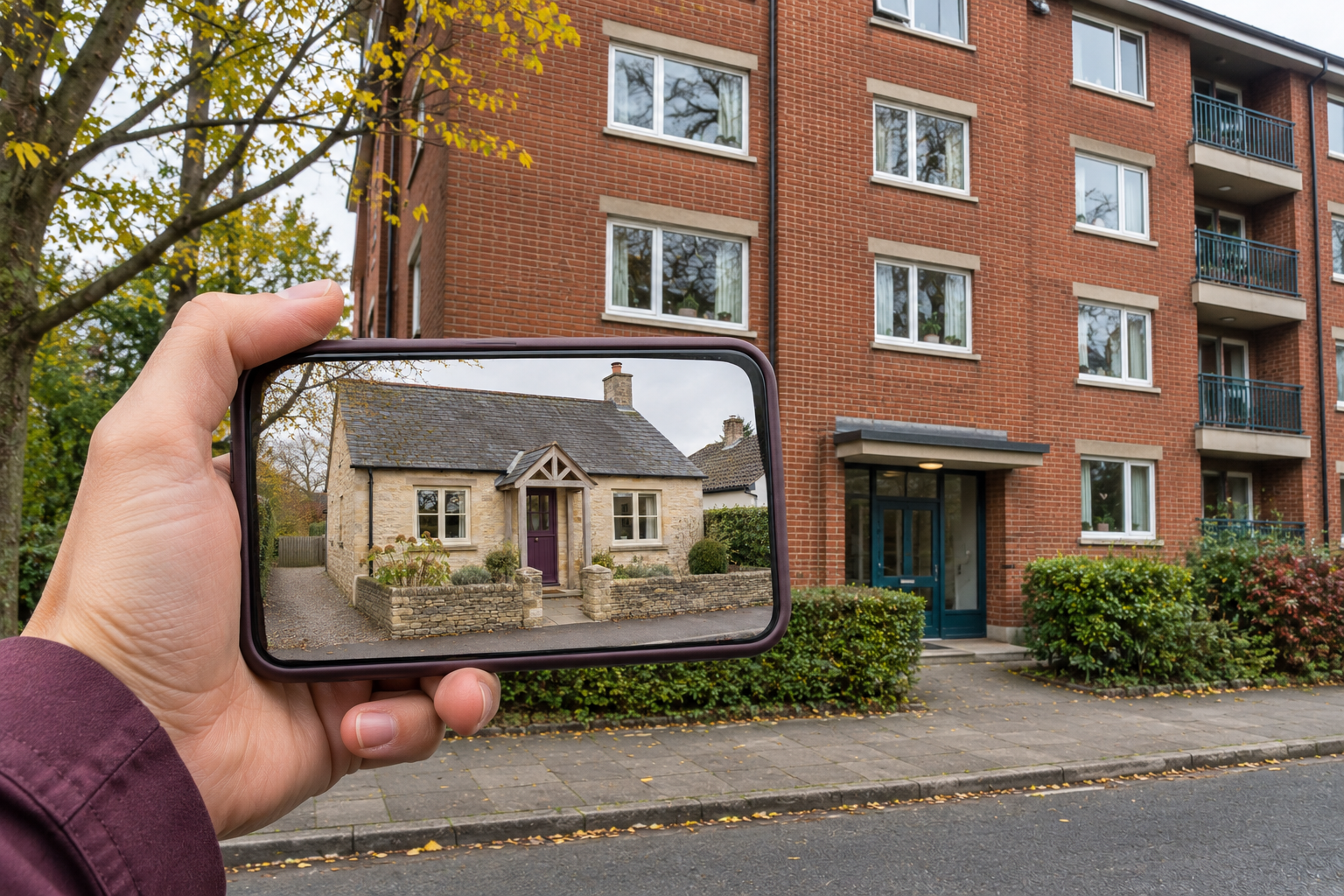
Use photographs and map information to ask concrete questions. Does the advertised exterior correspond to the building at the stated location? Is a claimed resort rental associated with the named resort? Does an image search point to an unrelated property or destination? If it does, ask for an explanation through an independently established contact route.

A search with no match is not a certificate of legitimacy. Nor does an older street image necessarily show the rental’s current condition. The point is to identify inconsistencies that could affect your decision, then resolve them. Keep the address and listing reference together so that you are discussing the same accommodation when contacting support or a manager.
Adapt the checks to a distant holiday stay
You may be booking somewhere you cannot inspect. Do not substitute an impossible rule, such as never reserving an unseen vacation home, for checks you can actually perform. Research the business independently, establish how the reservation is made and understand the supported payment route. If someone you trust is nearby and willing to help, a location check can add context without replacing the booking checks.
Stay on public routes and respect occupants’ privacy. A house’s existence does not entitle a prospective guest to enter it, confront someone living there or ask a stranger to open the door. A video tour can help you assess the accommodation, but it does not by itself prove the sender’s authority or guarantee that your dates are available.
Establish who can offer the rental for your dates
Distinguish ownership from authority to manage a booking
The Texas attorney general’s vacation-rental guidance warns that someone occupying a property may falsely present themselves as its owner. It recommends investigating whether the person is a legitimate owner or sublessor. The useful general question is authority: why is this person or business entitled to offer this rental?
A non-owner is not automatically suspicious. A legitimate manager may handle the rental on an owner’s behalf. Public ownership information, where available, can provide a name to compare, but it will not necessarily describe every management relationship or confirm an individual reservation. Ask who operates the accommodation and how the person collecting payment fits into that relationship.
For a resort property, contact the resort through contact details you locate independently and ask it to confirm the relevant contract or booking details. For a rental company, find its genuine website and contact route separately from the payment message. Explain the property reference, dates and request you received. The question is more useful when it names the exact transaction instead of asking whether the company is generally legitimate.
Verify the contact, not just the familiar name
The FBI’s August 2026 rental-scam warning describes copied listings that pair a real broker’s name with a fake email address. A recognized name in a signature therefore does not establish who is answering you. Treat an unfamiliar number or email as a contact to verify, especially when it changes the payment arrangements.
Do not use the questionable message as the only source of its own verification. If the sender tells you to telephone a particular person to confirm the deposit, that can leave you inside the same unverified conversation. Return to the genuine booking account, company site or independently located resort contact. Check the request there before following a new link or sending more information.
These are the same independent-contact habits that underpin our Cybersecurity Basics guide. Here, apply them to a specific property and reservation rather than relying on a general feeling that the message sounds professional.
Keep the rental booking and payment connected
A familiar platform does not authenticate a separate payment request
If you start on a booking platform, examine what will actually be recorded in your account before paying elsewhere. Is the amount part of the reservation, a disclosed charge or something newly introduced in a message? Who is collecting it? Where will you find the receipt and the support route if the accommodation is unavailable?
Under Airbnb’s pricing and payment policy, booking payments and mandatory charges generally belong on its platform, with required fees disclosed before booking. The policy also has limited exceptions, including certain disclosed fees or deposits collected by software-connected hosts and some hotel or optional-extra arrangements. Those exceptions are a reason to confirm the actual request, not a reason to accept a sender’s unsupported claim that an exception applies.
For example, an unexpected message saying that a separate transfer is needed to release your booking should send you back to the genuine reservation and platform support. Ask whether this charge and collection route are supported for that particular rental. Do not resolve the uncertainty by following another link supplied by the same correspondent.
Read the conditions behind a protection label
VrboCare’s terms describe assistance for qualifying bookings through Vrbo Checkout, including approved integrated partner payment flows after checkout. They exclude payments entirely outside supported routes and impose eligibility, evidence and reporting conditions. The program does not mean that every rental, payment or additional travel expense is covered.
This distinction matters when a payment page has a different address from the site where you began. An external link alone does not settle whether a transaction is fraudulent or supported. Confirm the link’s role through your genuine reservation and the platform’s own contact route. A correspondent claiming to be an approved partner has not established that status merely by saying so.
For a direct rental, identify the company or owner collecting the deposit, obtain the written agreement and understand the payment provider’s process for seeking help. You cannot assume that a platform’s assistance applies to a booking it did not handle. Make that comparison before you pay, while you still have the option to choose another arrangement.

Read what the rental deposit commits you to
A deposit request should make sense within the written booking terms. Identify the property, dates, guest details, total cost, amount due now, remaining payments and cancellation conditions. Distinguish a reservation payment from a security deposit or an optional service charge. If the explanation uses those terms interchangeably, ask what the payment is for and when, if ever, it is refundable.
Compare the agreement with the listing and checkout information. A new amount, recipient or collection method deserves an explanation before payment. Ask for a corrected written record if the terms change. Keeping several contradictory messages does not tell you which arrangement the business will recognize.
Do not treat a written contract as proof of legitimacy. It is a record to check against the property, advertiser and payment route you have already investigated. Likewise, a receipt for sending money establishes a transaction; it does not necessarily establish an accepted reservation. Find out where the rental confirmation will appear and how to contact the responsible business about it.
Read the word “refundable” in context. Ask what event would trigger a return, who holds the money and which conditions could affect the amount. A cancellation payment and a hold for possible damage answer different questions. Save the applicable explanation with the booking terms rather than relying on a reassuring sentence in a separate chat. If the business cannot explain how its description fits the agreement, leave the question open instead of treating the most favorable interpretation as settled.
Pause when the response to a reasonable question is another deadline or demand. A holiday stay can become unavailable while you check, but that does not make an unexplained deposit recipient acceptable. If the material facts cannot be confirmed before the stated deadline, consider another rental rather than buying certainty with an irreversible payment.
Before paying a rental deposit, make one final pass
Use a short routine that checks the actual booking rather than trying to award the advertisement a safety score:
- Identify the accommodation. Keep the full address, listing reference, dates and advertised features together. Note any unresolved conflict with independent location or listing information.
- Identify the responsible business or person. Establish the advertiser’s role and use a contact route found independently to confirm a surprising request. A company name or public ownership match alone is insufficient.
- Identify the payment. Check its purpose, amount, recipient and collection route against the agreement and genuine reservation. Resolve changes before following a new payment link.
- Identify the conditions. Read cancellation, deposit and support terms for this booking. Know which company’s assistance you would seek and what information it would need.
- Keep a usable record. Save the listing, agreement, messages, confirmation and payment reference in a place you can reach while traveling. Avoid creating unnecessary copies of identity documents just to build a booking file.
If someone else is arranging the holiday, share the unresolved question before the payment is made. A group chat full of reassuring property photos can obscure the fact that nobody has checked the recipient. Agree who will keep the confirmation and who will contact the business if the rental details change.
Do this while the booking is still a choice. Set aside time to read the terms before a travel companion is waiting for a payment confirmation or transport is being arranged around the stay. Keep a practical alternative in view: a different rental, another type of accommodation or different dates. You do not have to prove that an offer is criminal before deciding that an unresolved payment request makes it unsuitable for your trip.

Apply the same restraint to personal information. Ask why a document or additional account detail is needed and verify the designated submission route before sending it. Our Privacy & Identity Protection guide explains how to limit exposure and distinguish routine privacy work from a response to information already at risk.
If you already sent the deposit, act on the payment you made
Start with the FTC’s payment-specific steps after a scam. Contact the relevant financial institution or payment provider promptly through a known route. Explain what happened and ask whether the payment can be stopped, reversed or refunded. Do not assume that an authorized transfer induced by deception will be handled in the same way as an unauthorized account transaction.
Be precise about the method. A card payment calls for contacting the card issuer; a transfer from your bank or through a banking service calls for contacting the bank or credit union. If you used a payment app or wire-transfer company, contact that provider as well. Give the transaction date, amount, reference and recipient details. Help may depend on the circumstances, and a request for recovery is not a guarantee that money will come back.
Describe what you authorized accurately. Explain whether you knowingly sent a deposit but now suspect the rental offer was false, or whether an account shows a payment you did not make. Tell the provider about any additional payment request still pending. Ask how to submit the supporting records, obtain a reference for the report and note any follow-up instructions. This makes the conversation about the actual transaction rather than a general request to fix a holiday booking.
Report the listing and messages to the platform where you encountered them. Preserve the advertisement, property reference, agreement, sender details, payment instructions and receipt. If information has changed, record what changed and when. For suspected fraud, the FBI guidance also directs victims to report to their financial institution and IC3; reporting does not promise recovery.
Do not send an additional payment just because the correspondent says it is needed to activate a refund, release a reservation or transfer the deposit to another rental. Independently verify any such proposal with the actual business or payment provider. Keep the practical question clear: are you resolving the original transaction through a known route, or responding to another request from the same unverified person?
Then separate financial loss from other exposure. If you entered a password on a questionable page, secure that account from a trusted route and address any reuse. If you shared identity information, consider what information it was and whether there are signs of misuse. A rental deposit sent to the wrong recipient does not by itself establish that every account or identity document is compromised.
If you also followed a suspicious link or supplied account details, use our scam-link response checklist for the relevant next steps. Avoid adding device or account procedures that do not match what happened; describe the actual payment and information disclosure when asking for help.
If you arrive and the rental is not available
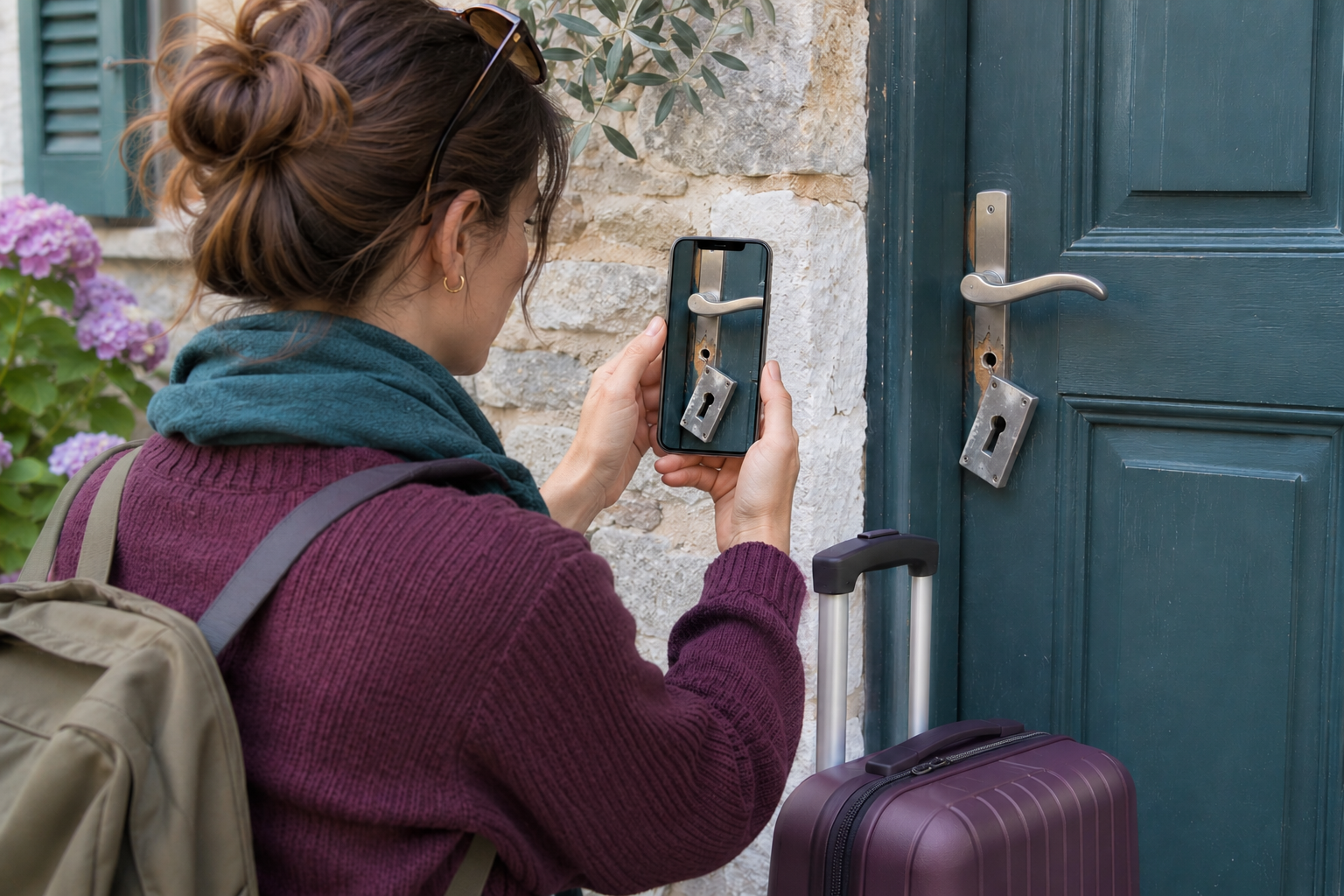
First find a safe place to pause. Do not enter an unfamiliar property without authorization, confront an occupant or send a new payment simply to obtain an entry code. Contact the booking platform or verified manager through a known route. Describe whether the problem is access, a missing reservation, an unsafe condition or a major difference from the advertisement.
Airbnb’s rebooking and refund policy for homes gives one specific example of why prompt reporting matters: for covered reservation issues, it generally requires a report within 72 hours after discovery, with relevant evidence. That is an Airbnb policy condition, not a universal deadline for every holiday rental. Refunds and replacement assistance depend on the facts, policy and availability.
Preserve evidence when it is safe to do so, such as the access message, booking confirmation and photographs of a material problem. Record when you discovered the issue and contacted support. Explain any immediate safety concern before discussing replacement arrangements. Do not remain somewhere unsafe just to produce a more complete complaint.
Ask what the platform or manager can confirm before committing to an alternative it has not authorized. If you need to make immediate arrangements for safety, keep the receipts and ask about the applicable process without assuming every extra expense will be reimbursed. The immediate goal is safe accommodation; the separate financial question needs its own written record and verified support route.
Conclusion
A holiday rental can look real because the property is real. The decision before a deposit is whether the advertiser, reservation and payment belong to a legitimate arrangement for your stay. Check the connections that a photograph cannot establish, read the terms that apply to your booking and pause an unexplained change before sending money.
If something has already gone wrong, use known support and payment-provider routes, preserve a useful record and match the response to what happened. For more practical guidance on everyday digital decisions, subscribe to Quantum Cyber AI.
FAQ
Is paying a deposit for a holiday rental always a scam?
No. Evaluate what the deposit is for, who collects it and how it fits the written booking terms. An unexplained recipient or a request to abandon the supported payment process needs checking before you pay. The existence of a deposit alone does not settle the question.
Does finding the rental address on a map prove the listing is genuine?
No. It helps establish that a place exists at that location. It does not establish the correspondent’s authority, availability for your dates or acceptance of your reservation. Compare the property information and independently verify the advertiser and payment request.
Should I refuse every payment link outside a booking platform?
Do not assume that a link is legitimate or fraudulent solely because it goes elsewhere. Some official policies allow specific disclosed fees or approved partner flows. Confirm a surprising request through the genuine reservation and platform support before paying; a sender’s claim that an exception applies is insufficient.
Will the bank or booking platform refund a lost rental deposit?
That depends on the transaction, applicable terms, evidence and circumstances. Contact the relevant provider promptly, describe the payment accurately and ask what help is available. Keep records and follow the official process without treating a protection label or complaint submission as a guaranteed refund.