
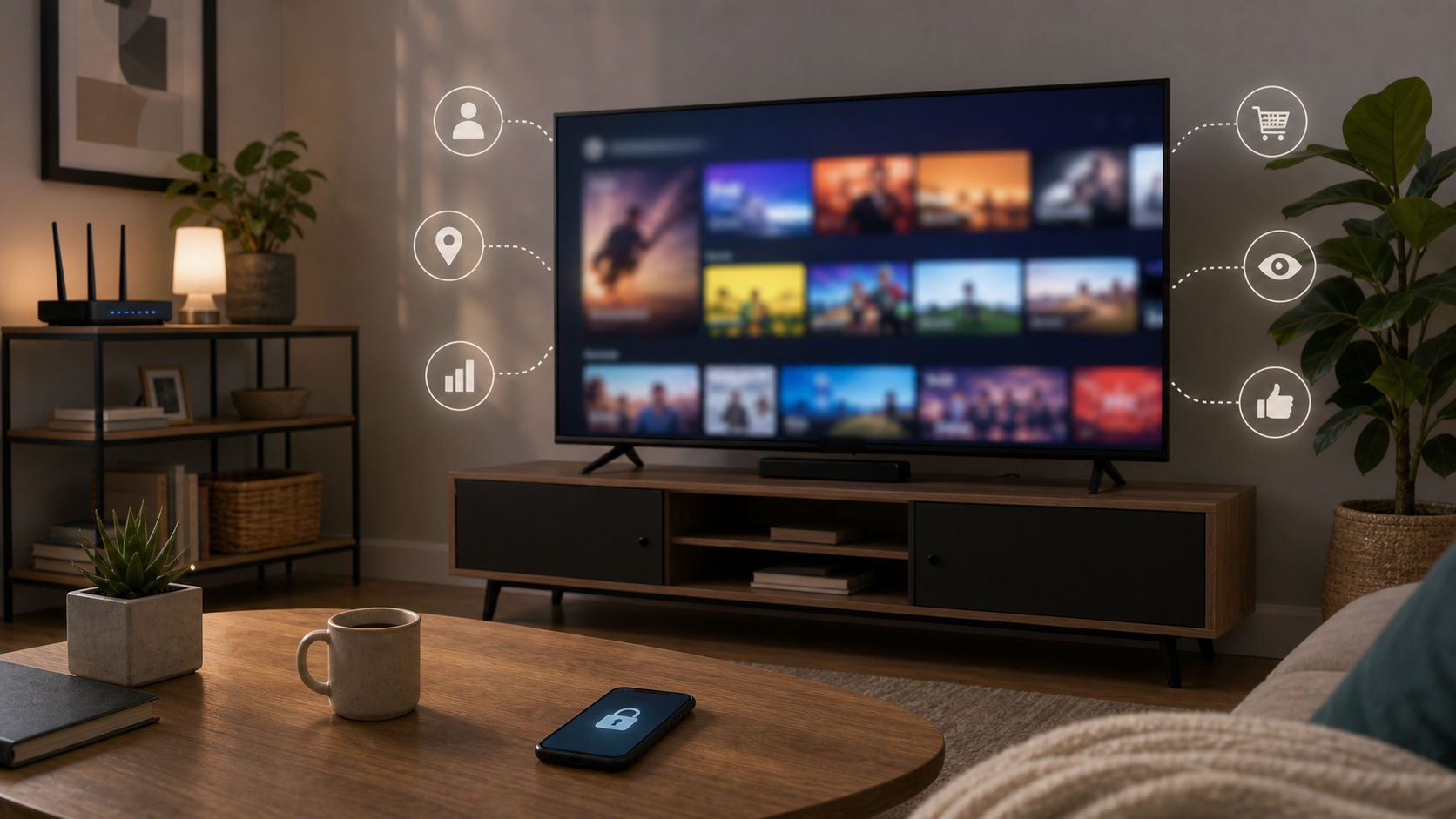
A smart TV is easy to treat like furniture. It sits on the wall, opens streaming apps, remembers the HDMI inputs, and fills the living room with shows, sports, games, and background noise. But smart TV privacy deserves the same attention as a phone app or smart speaker because the TV is no longer only a screen. It can be an app platform, advertising surface, voice device, recommendation engine, operating system, and connected-home dashboard in the room where families relax.
The practical issue is not that every smart TV is secretly recording every conversation. The practical smart TV privacy issue is that viewing data, app data, account data, voice features, ad identifiers, and device settings can combine into a useful household profile. A TV can learn what people watch, when the screen is active, which apps are installed, which devices are connected, which account is signed in, and which privacy settings were skipped during setup.
Key Takeaways
- Smart TV privacy starts with automatic content recognition, app data, accounts, voice settings, ad personalization, and router security.
- Automatic content recognition can identify what appears on the screen and may include some HDMI or external-device viewing depending on the model and settings.
- Manufacturer tracking and streaming app tracking are separate layers, so turning off one setting does not fix every privacy issue.
- You can reduce tracking by disabling viewing-data features, limiting ad personalization, reviewing voice settings, removing unused apps, and securing the home network.
- You may not need to sign into every TV platform account if a separate streaming device already handles apps.
- Before selling or giving away a smart TV, sign out, remove apps and profiles, forget networks where possible, and factory reset the TV.
What Smart TV Privacy Tracking Can Include
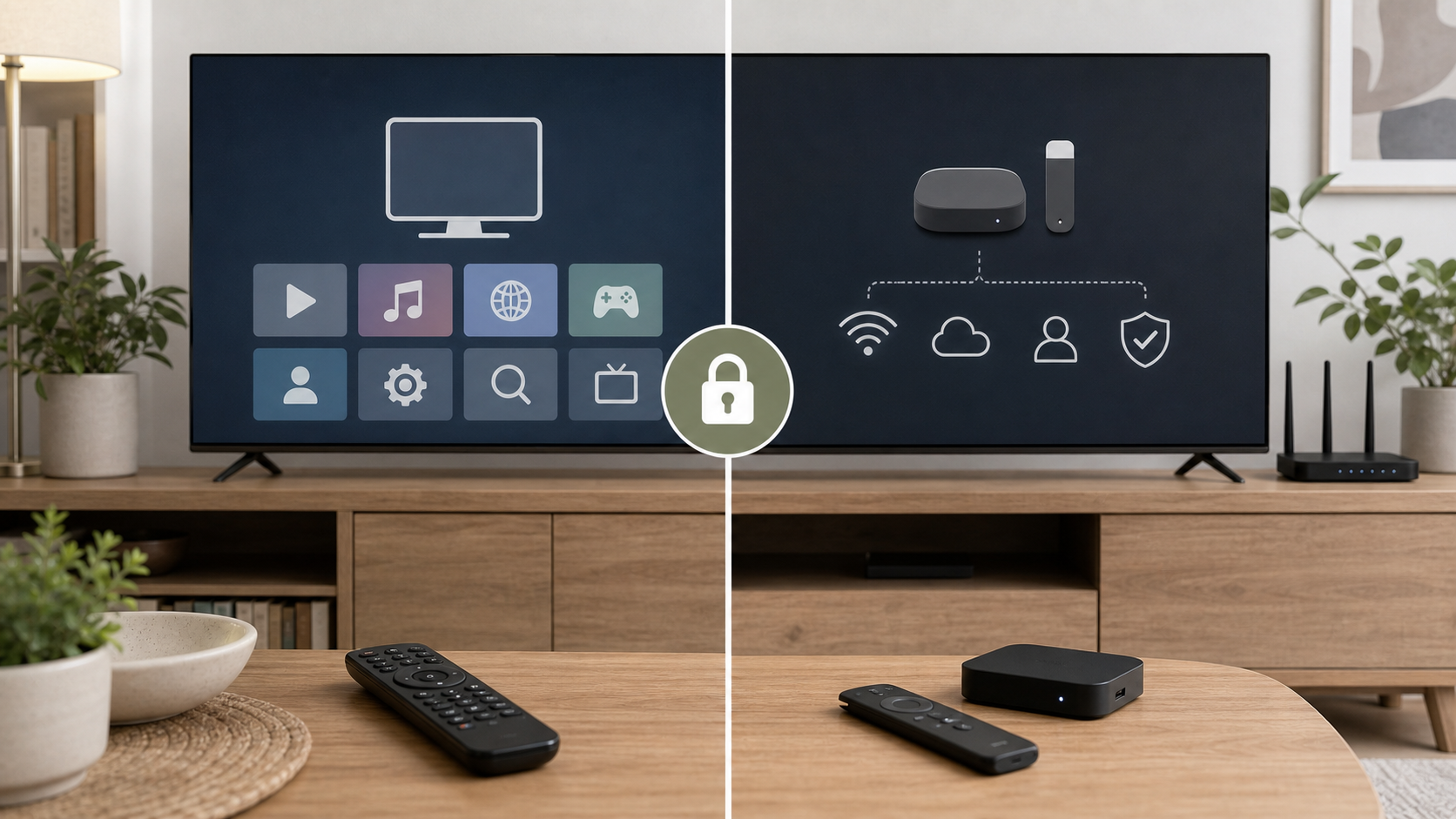
Smart TV privacy begins with understanding how many parts of the TV can collect or infer data. A modern TV may have a manufacturer account, app store, free streaming channels, recommendation rows, voice assistant, remote microphone, ad ID, location setting, HDMI device list, and software update channel. Some TVs also connect with smart-home devices or show dashboards for cameras, lights, and speakers. For smart TV privacy, those pieces should be treated as one ecosystem.
The data categories are not all equally sensitive, but together they can describe household habits. Device identifiers can link activity to a specific TV. Viewing data can show interests, routines, languages, news habits, children’s content, health topics, political interests, religious programming, or late-night habits. App activity can show which streaming services are installed and how often they are opened. Voice features may process commands. Ad settings can connect the TV to broader advertising systems.
Samsung’s current U.S. privacy policy is a useful official example of the range involved. It says Samsung collects identifiers for visual display devices, including Smart TVs, such as a Personalized Service ID and Tizen Identifier for Advertising, along with usage and log information, nearby Wi-Fi information or inferred location in some cases, and voice recordings when voice commands are enabled in Samsung’s U.S. privacy policy. That does not mean every brand uses the same terms or categories. It does show why smart TV privacy is about the whole device ecosystem, not one menu toggle.
The account layer matters too. If the TV asks for a manufacturer login, that login may connect the TV to email, purchases, warranty data, device registration, ad preferences, and cloud features. Some owners need that account for app downloads, updates, voice assistants, or smart-home controls. Others may be able to skip it and use a streaming device, cable box, game console, antenna, or external computer instead. The more the TV account does, the more carefully smart TV privacy settings should be reviewed.
For the broader household view, Quantum Cyber AI’s Smart Home Security Checklist is a useful companion because a smart TV is one of several connected devices that may share the same router, accounts, and living space.
Why Automatic Content Recognition Changes The Privacy Picture
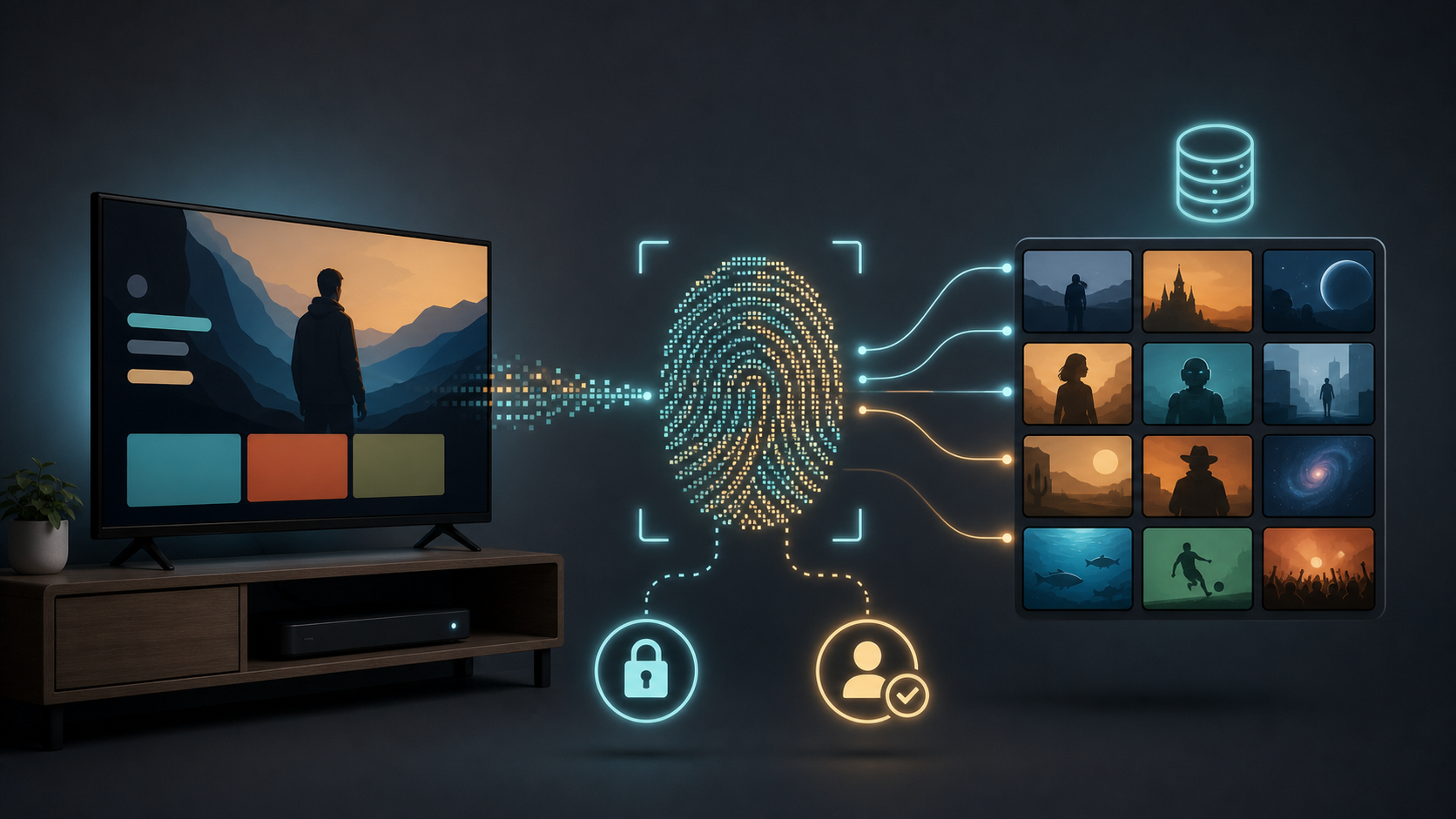
The setting most people miss is automatic content recognition, often shortened to ACR. ACR is the smart TV privacy feature that can identify what is playing on the screen. It may work by capturing or fingerprinting small pieces of what appears on the display and matching them against a content library. That can support recommendations, audience measurement, and advertising. It can also turn the TV into a viewing-profile device, which is why smart TV privacy audits should start here.
The Vizio case is the classic warning. The FTC said Vizio agreed to pay $2.2 million to settle FTC and New Jersey charges that it collected viewing histories from more than 11 million internet-connected TVs without clearly telling consumers or getting their consent, then used viewing data for advertising and cross-device targeting in the FTC’s Vizio enforcement explanation. The point is not that every current TV behaves like that older case. The point is that screen-level viewing data has been valuable enough to create real enforcement history.
ACR can also matter when you are not using the built-in apps. A 2024 academic study described ACR as a Shazam-like method for identifying what appears on a smart TV screen, and it found ACR tracking on tested Samsung and LG TVs, including when the TV was used as an external display. The study also found that opting out stopped the tested ACR network traffic in the smart TV ACR study. For smart TV privacy, the takeaway is practical: if you use a smart TV with a cable box, game console, antenna, laptop, or streaming stick, do not assume the built-in app settings are the only privacy settings that matter.
ACR settings are not always named “ACR.” They may appear as viewing information, viewing data, Live Plus, Samba, smart recommendations, interest-based ads, content recognition, or similar wording. The setting may be in privacy, advertising, terms and conditions, support, general settings, or a vendor-specific menu. The name can change by brand, model, year, software update, and region, so search for the setting labels rather than expecting one exact menu path.
If you want the TV to stop building a viewing profile from the screen, look specifically for the viewing-recognition setting and turn it off. Then check the ad personalization setting separately. ACR and ad personalization often live near each other, but they are not the same smart TV privacy setting.
Built-In TV Apps Add A Second Layer
Turning off ACR is important, but it does not automatically stop every streaming app from collecting its own data. Smart TV privacy has layers. The TV manufacturer may collect device and platform data. The operating system may collect app-store and ad data. Each streaming app may collect account, search, watch history, device, subscription, and advertising data under its own policy.
The FTC explains that websites and apps may collect information through cookies, pixels, device fingerprinting, advertising IDs, and cross-device tracking, and it advises people to review privacy settings and permissions in its guide to how websites and apps collect information. A TV app may not look like a phone app, but it can still be part of an app and advertising ecosystem.
This is why a smart TV can feel confusing. You may turn off the TV manufacturer’s viewing data and still see personalization inside a streaming service. You may limit ads at the TV platform level and still have recommendations inside each app. You may use a child profile in one app while the TV’s home screen still tracks which apps open. There is not one master privacy button.
The cleanest smart TV privacy approach is to separate layers:
- TV manufacturer settings: ACR, ad personalization, voice, usage data, location, and device IDs.
- TV operating system settings: app store, ads, recommendations, installed apps, and updates.
- Streaming app settings: watch history, profiles, ad preferences, autoplay, search, and account security.
- Network settings: router security, device isolation, DNS, and guest networks.
Smart TV privacy improves when you check each layer once instead of hunting for one perfect setting.
Voice, Cameras, And Smart-Home Features Need Separate Decisions
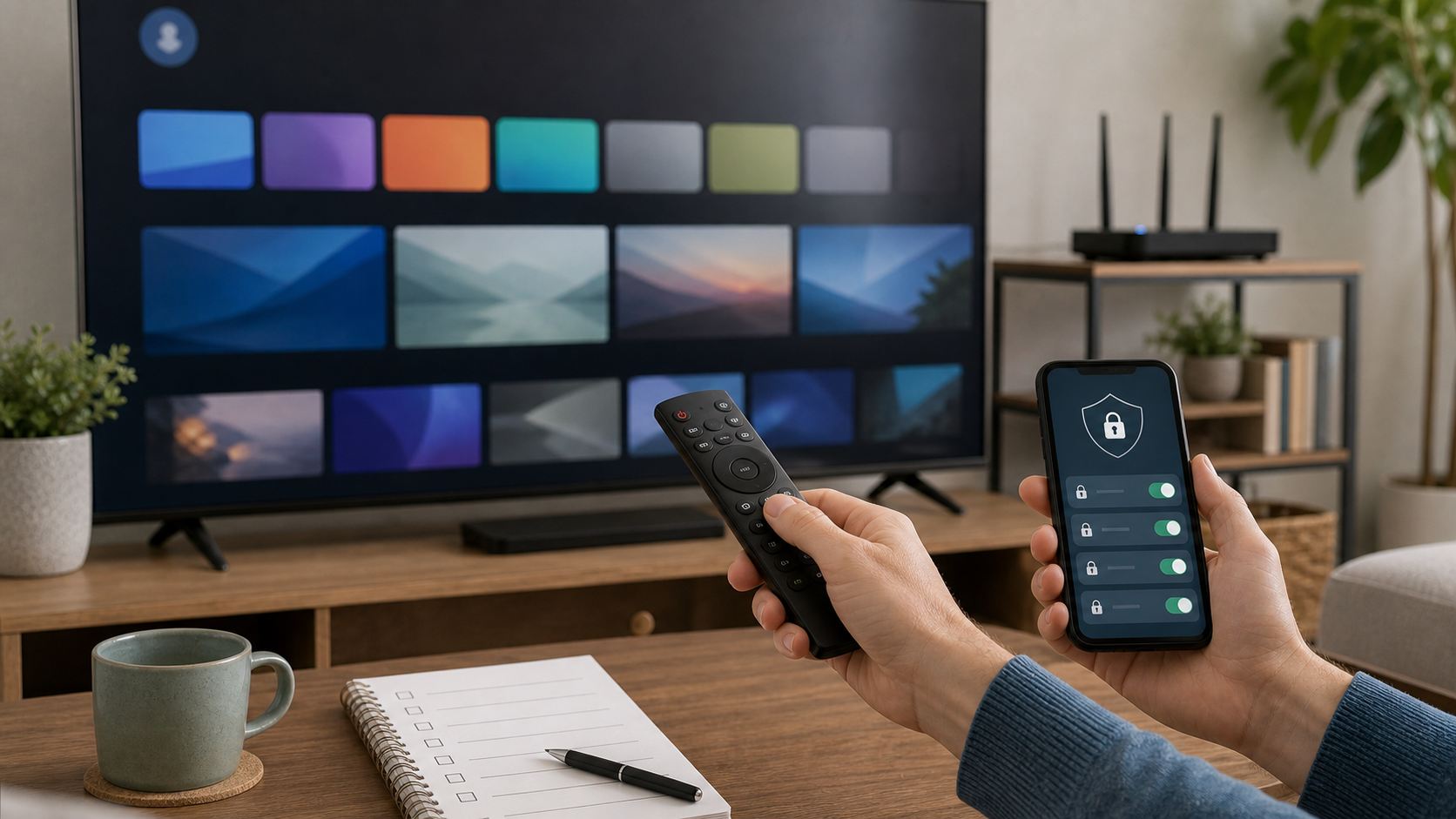
Voice controls are convenient. A remote microphone can search for a show faster than an on-screen keyboard. A built-in assistant can change volume, launch apps, or control smart lights. But voice features are not the same as ordinary remote-control buttons, and smart TV privacy gets stronger when you decide how much voice control you actually need.
Some TVs or remotes only listen when you press a microphone button. Some support wake words. Some connect to Amazon, Google, Apple, Samsung, LG, Roku, or another assistant ecosystem. Some save voice history or use voice data for service improvement. Some households are comfortable with that. Others would rather use a button-only remote or phone app. The important thing is to check.
Cameras are less common on mainstream TVs than microphones, but they exist on some models and accessories. If a TV has a camera, treat it like any indoor camera. Check whether it has a physical shutter, indicator light, app permissions, video-call settings, face recognition, gesture controls, or smart-home features. If you do not use the camera, disable it or cover it if the design allows.
Smart-home dashboards also deserve attention. A TV that shows doorbell cameras, baby monitors, security feeds, lights, or thermostats can become a shared display for private household information. That may be useful, but it should not be enabled casually on a living-room screen where guests, children, or roommates can see it.
The practical smart TV privacy rule is simple: if a feature senses the room, listens for commands, shows private device feeds, or links the TV to other smart-home systems, treat it as a separate privacy decision.
Buying And Setup Questions Before Signing In
The best smart TV privacy choice happens before the first sign-in. Setup screens are designed to get the TV online quickly. They may ask for Wi-Fi, account login, terms acceptance, voice assistant setup, viewing data consent, ad personalization, location, and app recommendations in one flow. It is easy to agree because everyone wants the screen working.
Slow down and ask a few questions.
Can the TV be used without the manufacturer account? If you only use a cable box, game console, antenna, or separate streaming stick, you may not need every built-in smart feature. Some TVs still need an account for updates or app downloads, but many features are optional. If account sign-in is optional, decide whether it adds value.
Can ACR be turned off during setup? Some TVs ask about viewing data in the first-run process. Others bury it later. If the option appears during setup, read it carefully. If it is bundled with recommendations or ads, decide whether the smart TV privacy tradeoff is worth it.
Does the TV receive software updates? NIST’s IoT baseline is written for cybersecurity planning, but it translates into consumer questions about whether a device can be securely configured, updated, protected from unauthorized access, and supported over time in NISTIR 8259A. A TV that will sit in the house for seven years should not be treated like a disposable gadget.
Does the TV have far-field voice, a camera, or smart-home dashboard features? If so, find the privacy settings before you mount the TV or throw away the manual. A wall-mounted TV is harder to inspect later.
Can you use the TV as a display instead of the main app platform? A separate streaming device is not automatically private, but it can make settings easier to manage and replace. If the TV’s privacy menus are confusing, using it as a display may be the simpler route.
Settings To Change Now On A Smart TV
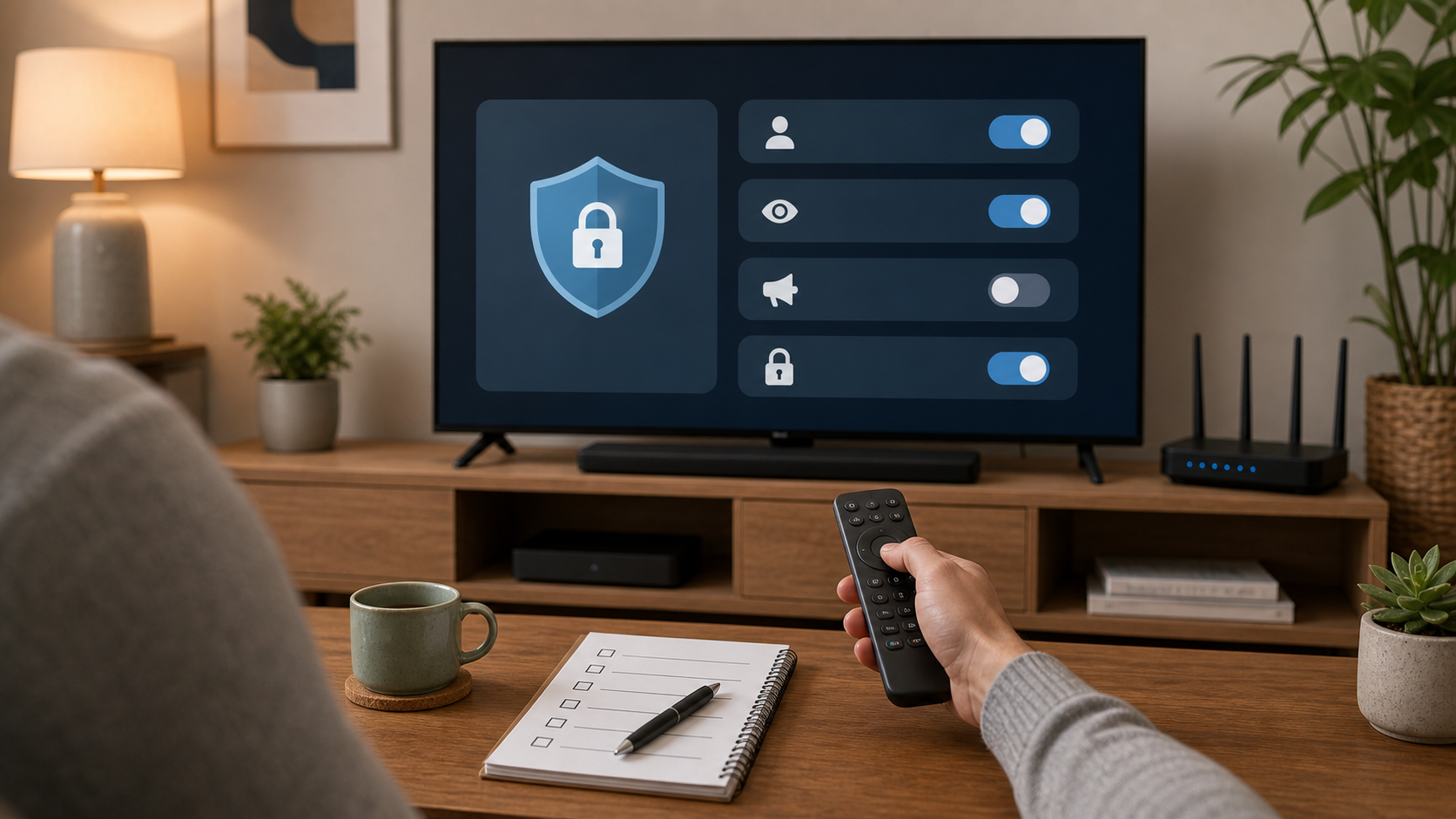
If the TV is already in the house, do a smart TV privacy audit while the remote is nearby. Menu paths vary by brand, model, region, and software update, so look for the setting names rather than expecting every screen to match a guide.
First, turn off ACR or viewing recognition if you do not want the TV platform identifying what is on the screen. Look for terms like automatic content recognition, viewing data, viewing information, Live Plus, Samba, TV viewing information, interest-based recommendations, or smart interactivity. Tom’s Guide published a current brand-by-brand settings guide that points to privacy menus for Samsung, LG, Roku, Amazon Fire TV, Google or Android TV, Sony, and Vizio in its smart TV data collection settings guide. Use guides like that as a map, but expect menu names to shift by model and update.
Second, limit ad personalization. Look for advertising ID, personalized ads, interest-based ads, tailored ads, vendor tracking, or reset ad ID. Resetting an ad ID does not erase every company record, but it can reduce continuity from that identifier and improve smart TV privacy.
Third, review voice settings. Decide whether wake-word listening is needed. Decide whether voice recordings are saved. If you use voice search only occasionally, a push-to-talk remote may be enough. If you do not use voice at all, turn the feature off as part of the smart TV privacy pass.
Fourth, remove unused apps. Every installed app is another account, update path, and privacy policy. Delete services you no longer use. Sign out of apps you keep but rarely open. Check profile and watch-history settings in major streaming apps separately.
Fifth, update the TV. Updates can fix privacy menus, app behavior, and security bugs. If the TV is offline forever, it may not get fixes. If it is online forever, it may collect more data. Smart TV privacy works best when that choice is intentional rather than whichever default happened on setup day.
Finally, secure the home network. The FTC advises using WPA3 or WPA2 encryption, changing default router settings, keeping routers updated, turning off risky convenience features such as remote management, WPS, and UPnP, and using guest networks when useful in its home Wi-Fi security advice. A TV does not need the same trust level as a work laptop. If your router supports a separate smart-home network, consider putting the TV there.
Quantum Cyber AI’s Home Router Security Checklist can help with that network pass, and the Home Network and Device Security hub can help you think about TVs, routers, cameras, speakers, and game consoles together.
When A Streaming Device Or Offline Mode Is Better
Some people try to solve smart TV privacy by never connecting the TV to the internet. That can work in certain setups. If the TV is only a display for a cable box, game console, Blu-ray player, computer, or external streaming device, the built-in smart platform may not need Wi-Fi. Offline mode can reduce manufacturer tracking from the TV itself.
There are tradeoffs. An offline TV may miss software updates, app fixes, security patches, and picture-setting improvements. If you plan to keep the TV mostly offline, consider connecting it long enough to complete a final software update first, then disconnecting it after setup. Some TVs push basic features, setup screens, or input settings through the smart platform. Some may nag for connectivity. If you use a separate streaming device, that device has its own tracking and account settings. You are moving the privacy work, not eliminating it.
A streaming stick or box can still be a good choice. It may be easier to replace than a TV, easier to update, and easier to factory reset. It can also centralize apps in one device while letting the TV act mostly as a screen. But it still needs privacy settings, ad settings, account security, app reviews, and network controls.
The best smart TV privacy setup is the one that matches how the household actually watches. If built-in apps are convenient and the settings are manageable, use them carefully. If the TV platform is too noisy or hard to control, use a separate device. If the TV only needs to show a game console or cable input, consider keeping it mostly offline after updates are handled. Smart TV privacy is easier when the connection has a clear purpose.
What This Means For Families And Shared Homes
A living-room TV is a shared device. Smart TV privacy settings can affect children, roommates, guests, partners, caregivers, and anyone else who watches in the household. Profiles and recommendations can be useful, but they can also expose interests or viewing habits in a shared space.
For families, review child profiles and parental controls in both the TV platform and the streaming apps. Do not assume one child profile protects every app. Review voice search and purchases too, especially if the remote is easy for children to use.
For roommates, avoid signing one person’s account into every app if multiple people use the TV. Use separate profiles where they help, but keep them simple. Do not enable voice recognition, personalized recommendations, or shared watch history unless the household actually wants that.
For guests, rental units, or short-term stays, factory reset between users when possible. A TV in a guest space should not expose previous app logins, watch history, payment methods, or personalized home screens. A guest should not inherit the owner’s profile, and an owner should not inherit the guest’s accounts. That is a smart TV privacy issue as much as a convenience issue.
Smart TV privacy is partly etiquette. A shared screen should not quietly become a shared dossier.
What To Do Before Selling Or Giving Away A Smart TV
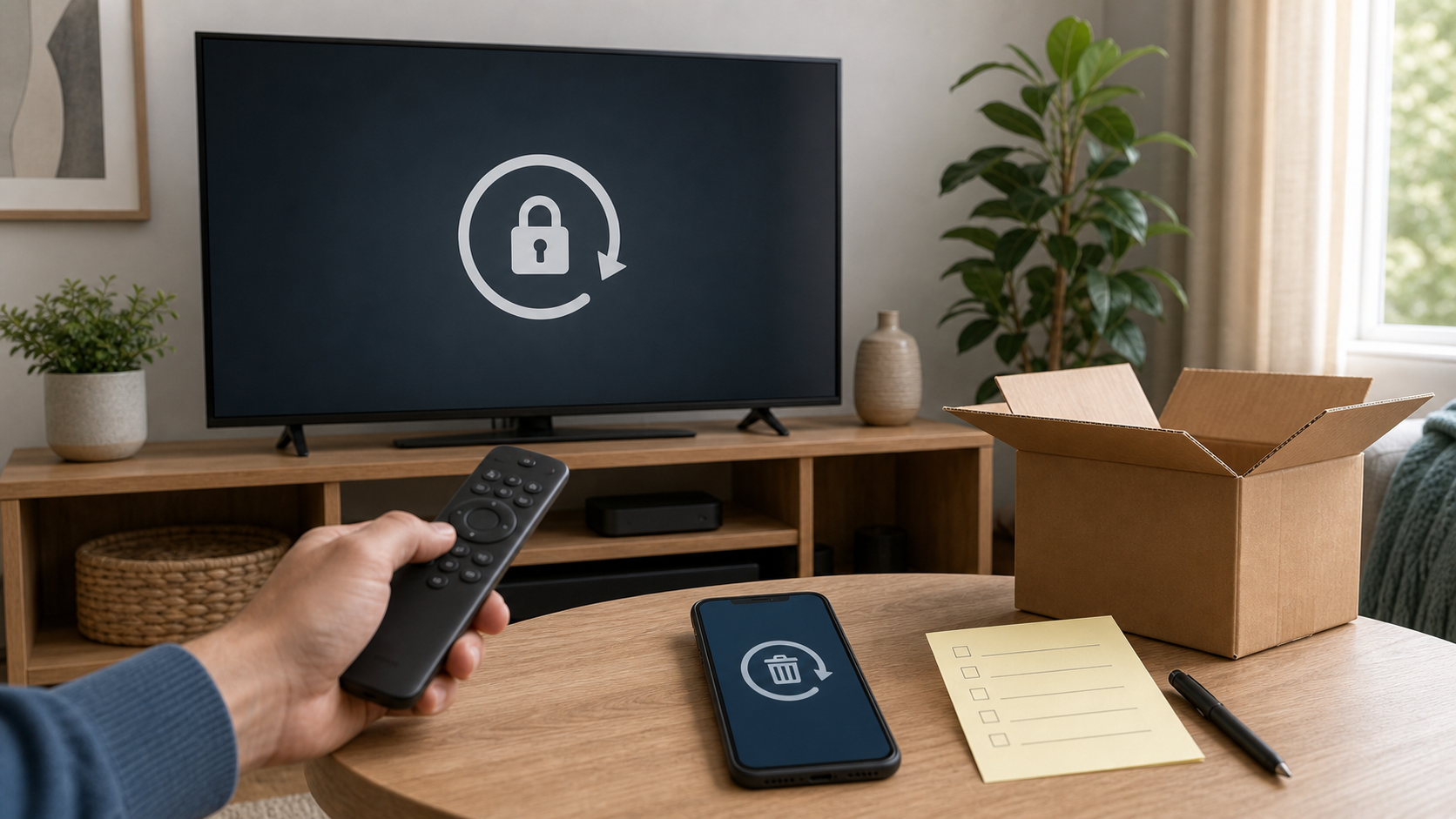
Before a smart TV leaves your home, treat it like a tablet with a very large screen. It may hold app logins, profiles, Wi-Fi details, voice settings, device names, purchase links, ad IDs, and connected account tokens. Do not sell or give it away while those are still attached.
Start by signing out of major apps. Remove streaming profiles if the app allows it. Remove payment methods where practical. Then remove the TV from the account lists for the manufacturer, Google, Amazon, Roku, Apple, Samsung, LG, or other platform tied to the TV. If you used the TV with smart-home dashboards, unlink those connections as part of the smart TV privacy cleanup.
Forget Wi-Fi networks if the TV provides that option. Then factory reset the TV. After reset, restart it and confirm it no longer opens into your accounts. If the TV has a camera accessory, remote microphone pairing, or external storage, remove those too.
If the TV is broken and cannot be reset through menus, check the manufacturer’s support instructions for hardware reset options. If the device contains storage that cannot be wiped, be cautious about resale. Smart TV privacy does not end when the TV is unplugged.
If A TV Account Or Streaming App Was Compromised
Sometimes the smart TV privacy problem is not tracking. It is account compromise. If a streaming app shows unfamiliar devices, strange watch history, changed profiles, unexpected purchases, or login alerts, handle it like an account incident.
Disconnect the TV from the internet if you need to stop activity quickly. Change the password for the affected streaming account from a trusted phone or computer. Change the linked email account password too if you suspect broader access. Turn on two-factor authentication where the service supports it. Sign out of all devices through the account’s security page.
Review payment history, gift-card balances, profile changes, and account email changes. Remove unknown devices. Reinstall or update the app if it behaves strangely. If the manufacturer account itself was accessed, change that password and review device lists and voice or smart-home integrations.
If the compromise is part of a broader identity or account problem, Quantum Cyber AI’s Privacy and Identity Protection hub can help you organize the next steps. Smart TV privacy can overlap with account security when streaming credentials, emails, and payment methods are involved.
A Practical Smart TV Privacy Checklist
Use this smart TV privacy checklist before or after setup:
- Decide whether the TV needs a manufacturer account.
- Turn off automatic content recognition or viewing-data features if you do not want screen-level viewing tracking.
- Limit personalized ads and reset the advertising ID where possible.
- Review voice assistant and microphone settings.
- Disable or cover camera features if present and unused.
- Remove unused apps.
- Review privacy settings inside major streaming apps.
- Check child profiles and purchase controls.
- Keep the TV updated if it remains online.
- Put the TV on a separate smart-home or guest network when the router supports it.
- Review smart-home dashboard connections.
- Factory reset the TV before selling, gifting, returning, or recycling it.
Smart TV privacy is not about making television hard to use. It is about making the TV behave like the screen you meant to buy, not an always-growing ad profile.
Conclusion
Smart TVs are useful because they make entertainment simple. They also make data collection easy to ignore. A device that knows what is on the screen, which apps open, which account is signed in, and which voice features are enabled can become a meaningful profile of a household.
The smart TV privacy fix is not to panic or throw the TV away. The fix is to choose intentionally. Turn off ACR if you do not want screen-level tracking. Limit ad personalization. Review voice settings. Remove unused apps. Secure the router. Decide whether built-in apps, a streaming device, or mostly offline use fits your household best.
Smart TV privacy is strongest when the TV is treated like a connected device from the first setup screen to the day it leaves the house. A practical smart TV privacy setup keeps that habit alive after the first week.
For practical privacy and smart-home checklists as connected devices change, subscribe to Quantum Cyber AI.
FAQ
What is automatic content recognition on a smart TV?
Automatic content recognition, or ACR, is a smart TV privacy feature that can identify what appears on the TV screen by matching screen fingerprints or samples against a content library. It can support recommendations, measurement, and advertising. If you do not want the TV platform identifying what you watch across the screen, look for ACR, viewing data, viewing information, Live Plus, Samba, or similar settings and turn them off.
Is a smart TV always listening?
Not necessarily. Some TV remotes only use the microphone when you press a button. Some TVs support wake words or voice assistants. Some voice features may save or process voice commands. Check the TV and remote microphone settings, voice assistant settings, and account voice-history controls. If you do not use voice features, turn them off.
Can I use a smart TV without signing into the manufacturer account?
Sometimes. Many TVs can show HDMI devices, antennas, game consoles, cable boxes, or streaming sticks without a full manufacturer account. Built-in apps, app downloads, updates, recommendations, and voice features may require sign-in. During setup, look for skip, later, or limited setup options, then decide what features you actually need.
Does turning off ACR stop streaming apps from tracking me?
No. Turning off ACR can reduce screen-level viewing recognition by the TV platform, but streaming apps may still collect watch history, search activity, app usage, account data, and ad data under their own settings and policies. For smart TV privacy, check privacy settings in each major streaming app too.
Is a streaming stick better for privacy than built-in smart TV apps?
It can be easier to manage, replace, or reset, but it is not automatically private. A streaming device is also an app platform with accounts, ads, recommendations, and tracking settings. It may still be a good choice if you want the TV to act mostly as a display and manage apps through one separate device.
What should I do before selling a smart TV?
Sign out of apps, remove profiles, remove payment links where possible, unlink voice assistants and smart-home dashboards, forget Wi-Fi networks if the TV allows it, remove the TV from platform account device lists, and factory reset the TV. Confirm it no longer opens into your accounts before giving it to someone else.