
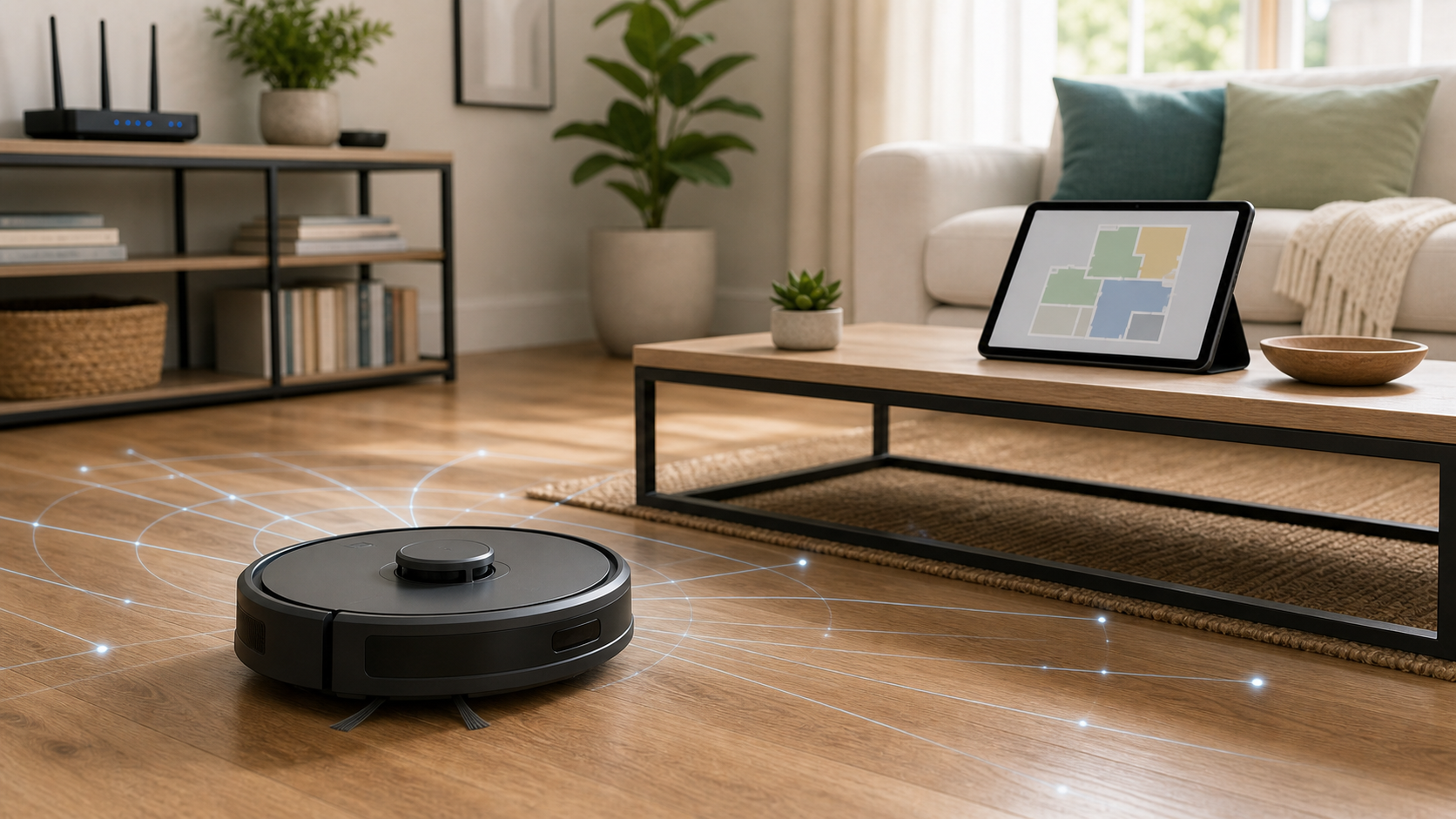
A robot vacuum looks like one of the least dramatic smart devices in the house. It bumps under chairs, gets stuck on cords, complains about socks, and quietly makes the floor a little less gritty. But robot vacuum privacy deserves a closer look in 2026 because the most useful models are no longer only cleaning appliances. They can also become mobile mapping devices that learn where rooms are, what objects are in them, when cleaning usually happens, and which spaces a household treats as off-limits.
That does not mean every robot vacuum is unsafe. It means the buying decision should be about more than suction power, mop pads, and whether the dock empties itself. The practical robot vacuum privacy question is what kind of map the vacuum creates, where that map is stored, who can access it, which app permissions support it, and whether the extra convenience is worth the extra data.
Key Takeaways
- Robot vacuum privacy matters because home maps can reveal bedrooms, home offices, nurseries, routines, pets, high-traffic areas, and rooms the household wants to avoid.
- Camera, microphone, speaker, object-recognition, cloud storage, remote viewing, and voice-assistant features increase the privacy surface.
- A simpler non-mapping or local-only model may be the better choice if you only need whole-floor cleaning.
- Router security, app permissions, account security, update support, and separate smart-home networks matter as much as cleaning performance.
- Before selling, gifting, or recycling a robot vacuum, delete maps, remove the device from the app account, reset it, and remove integrations.
- If someone accessed the vacuum or it behaves strangely, disconnect it, secure the account and linked email, preserve evidence, and contact the vendor.
Why Robot Vacuum Privacy Starts With Home Maps
The FTC’s broader Internet of Things guidance is a useful starting point for robot vacuum privacy because it treats connected household appliances as part of the same risk family as other internet-connected consumer devices. The agency says connected devices can raise privacy and security concerns, and it recommends security by design, reasonable access controls, lifecycle patching, data minimization, and notice or choice when data use goes beyond what people reasonably expect in its Internet of Things report announcement.
A robot vacuum map can look harmless in an app. It may show a living room, kitchen, hallway, and bedrooms as simple shapes. But the map is not only a drawing. It can reveal how the home is organized, where doors and walls are, which rooms are named, where the vacuum is blocked, which rooms get cleaned often, which areas are avoided, and which parts of the house have recurring messes. A map labeled “Nursery,” “Office,” “Guest Room,” and “Main Bedroom” says more than “the robot cleaned Tuesday,” which is why robot vacuum privacy starts with the map itself.
Robot vacuum privacy also depends on context. A map by itself may not identify a person. A map tied to an account, address, Wi-Fi network, phone app, cleaning history, and connected voice assistant is different. A cleaning schedule can hint when people are out. A room label can show where someone works from home. A no-go zone can reveal where pet bowls, fragile objects, children’s play areas, or sensitive rooms are. A repeated “spot clean” near a door, litter box, or kitchen can say something about household routines.
This is why robot vacuum privacy should be a buying and setup decision, not a reaction after the device has collected months of history. If a robot can clean well with less mapping, less cloud storage, and fewer account connections, that may be the right tradeoff. If advanced mapping solves a real problem, robot vacuum privacy settings need to be intentional from the start.
For broader smart-device planning, Quantum Cyber AI’s Home Network & Device Security hub is a useful companion because a robot vacuum is only one device in the larger household network.
What Advanced Robot Vacuums Can Collect
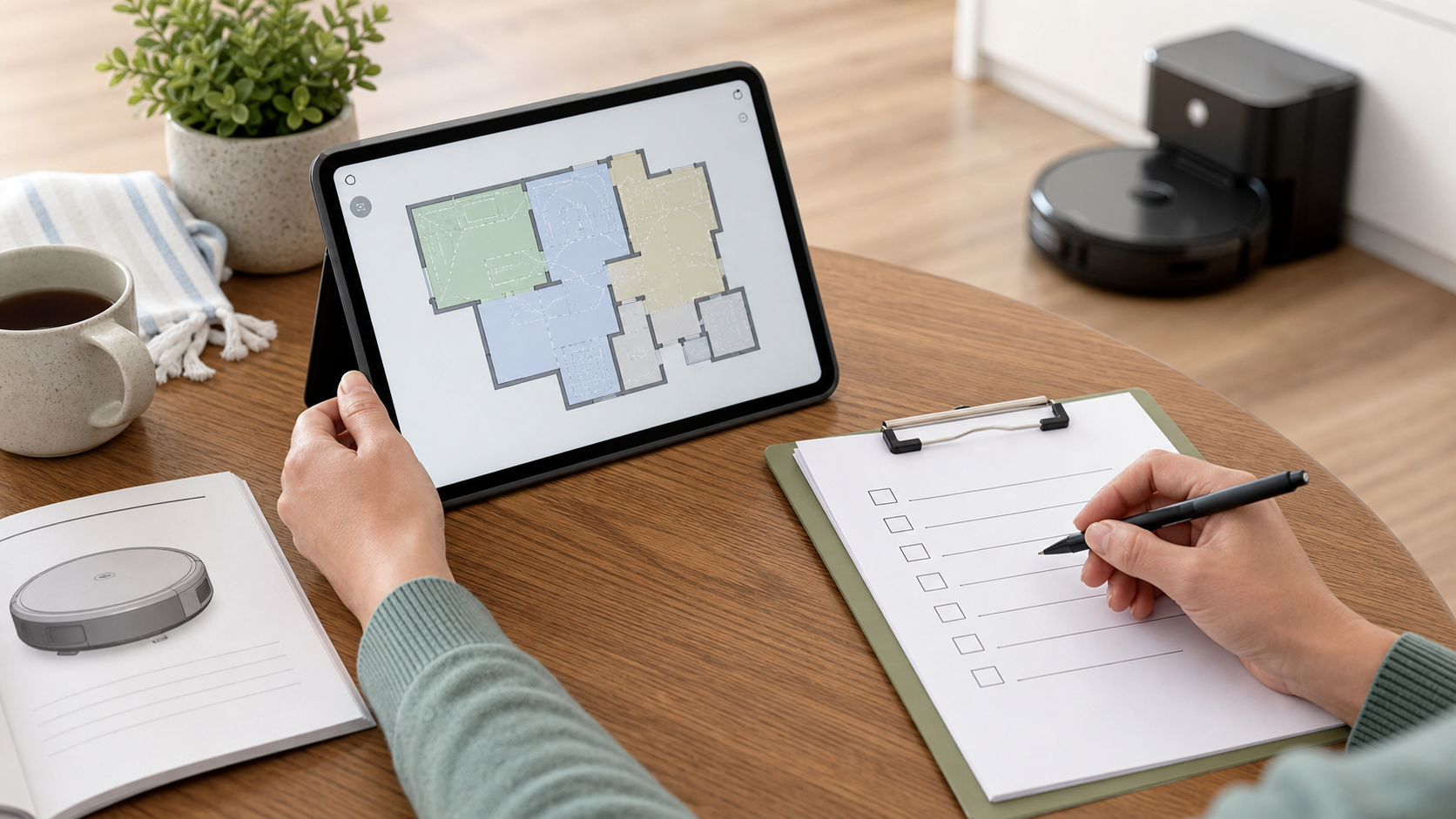
Robot vacuum privacy varies by model. Some basic vacuums move in simple patterns and may not store a detailed map. Others use LiDAR, cameras, structured light, object recognition, room labels, cloud accounts, smart speakers, and mobile apps. For robot vacuum privacy, the important move is to read the feature list as a data list.
iRobot’s current privacy policy shows what a mature robot vacuum ecosystem may involve. It lists device and app usage, mission information, device health, Wi-Fi name or credentials or signal strength, robot movement, floorplan and room names, object types, floor type, and other device environment information. It also says users may choose not to transmit map data and may choose whether to send obstacle images where image sharing exists in iRobot’s privacy policy. That does not mean every vendor collects the same information, but it gives buyers a concrete checklist for questions.
Floor plans and room labels
Mapping is the obvious privacy issue. A robot vacuum that creates a floor plan may let the app divide the house into rooms, rename those rooms, set no-go zones, mark cleaning zones, and save multiple floors. This can be useful. It lets someone tell the vacuum to clean the kitchen after dinner or avoid a child’s play mat. It can also preserve a simplified map of the home.
Room labels matter because they add meaning. “Bedroom 1” is less revealing than “Ava’s Room.” “Office” may be less revealing than “Tax Files.” A no-go zone labeled “Safe” or “Medication” is a problem for robot vacuum privacy, even if the vendor did not ask for that label. Room and zone labels may also sync across household phones, voice assistants, or smart-home integrations when those connections are active. Robot vacuum privacy improves when room and zone names are boring.
Cleaning schedules and mission history
Robot vacuums often keep mission history: start time, duration, cleaned rooms, error messages, dock events, dirty zones, or areas skipped. Those logs can be useful for troubleshooting. They can also show routines. A vacuum that runs every weekday at 8:30 a.m. may imply the household is usually gone. A vacuum that stops every time it reaches one room may say that room is cluttered, locked, occupied, or off-limits.
The robot vacuum privacy risk is not that a cleaning log is as sensitive as a bank account. The risk is that routine data can become revealing when it is stored, linked to an account, or shared with integrations.
Cameras, microphones, speakers, and object recognition
Some robot vacuums include cameras for obstacle avoidance, remote viewing, home monitoring, or object recognition. Some include microphones for voice commands or speakers for voice prompts. These features change the robot vacuum privacy calculation because they move the device from “map and clean” toward “sense and communicate.”
A camera that helps avoid cables and pet waste may be useful. A camera that can stream video to a phone should be treated more like an indoor camera than a vacuum accessory. A speaker that announces errors may be harmless. A speaker that can be used through a remote account creates a different robot vacuum privacy risk. A microphone used only for local wake words is different from a microphone that sends audio to a service. Buyers need to know which one they are buying.
App accounts, phone data, and third-party integrations
The vacuum app can collect its own information separate from the robot. The FTC explains that websites and apps may use cookies, pixels, device fingerprinting, advertising IDs, and cross-device tracking, and it tells consumers to review privacy settings and turn off unnecessary phone permissions in its guide to how websites and apps collect information. That matters for robot vacuum privacy because the app may know the account holder, phone device, location-related settings, notifications, connected services, and usage patterns.
Third-party integrations can add another path. If the vacuum connects to a voice assistant, smart-home platform, delivery service, warranty service, or replenishment program, the robot vacuum privacy picture changes. The question becomes: what does the integration need, and can it be removed when it is no longer useful?
Local Cleaning Versus Cloud Convenience
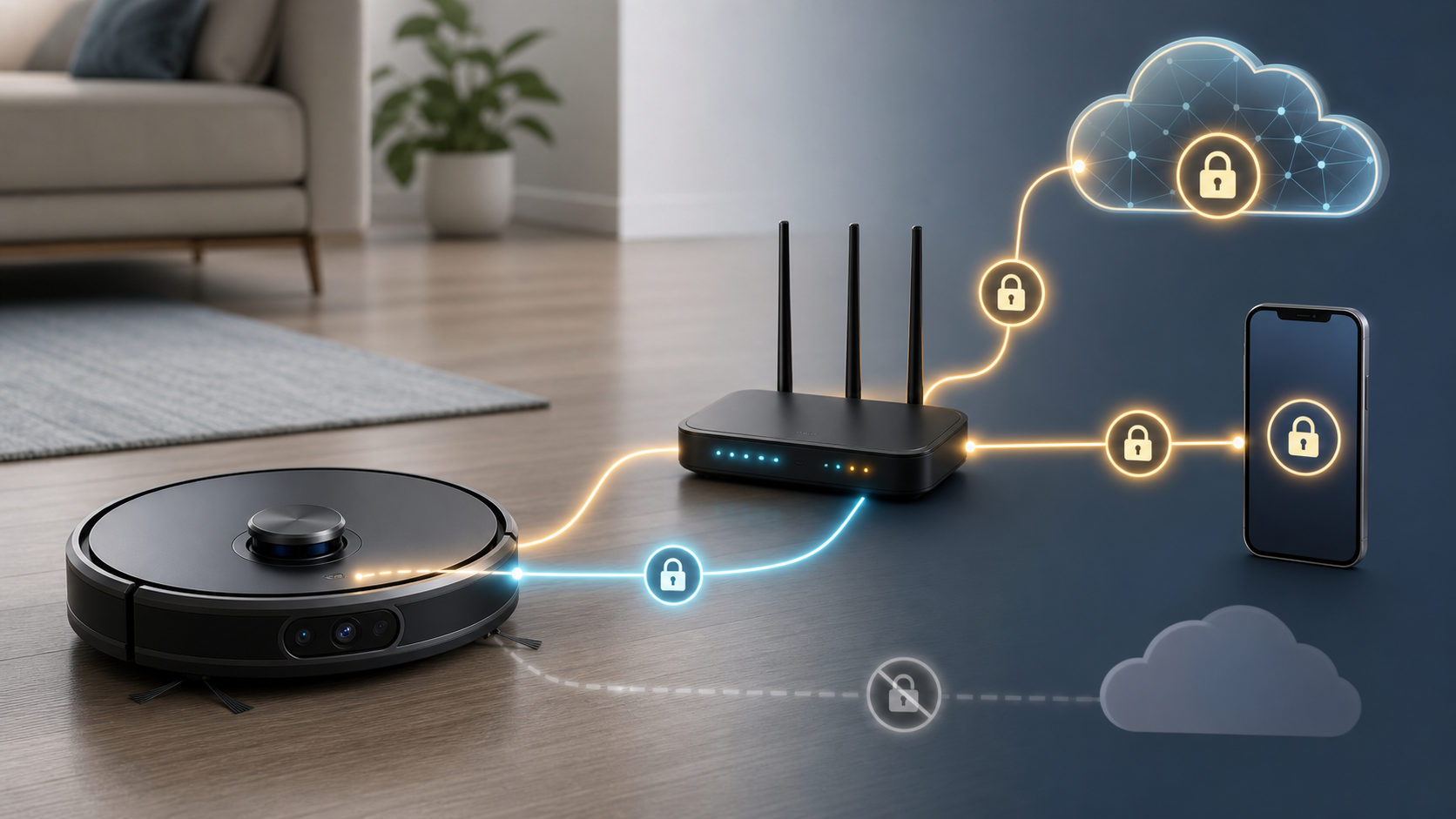
A useful way to think about robot vacuum privacy is to separate local cleaning from cloud convenience. For robot vacuum privacy, that split keeps the decision practical instead of abstract.
Local cleaning means the robot can perform its basic job with little or no cloud account involvement. A physical clean button starts the device. The robot navigates with sensors. It returns to the dock if it can. The household may lose room-by-room targeting, remote scheduling, map editing, or detailed history, but the device can still clean.
Cloud convenience adds features many people like. You may be able to start the vacuum while away from home, select a single room, draw no-go zones, review a cleaning map, connect a voice assistant, get maintenance reminders, or let the robot improve obstacle recognition over time. These features can be genuinely useful, especially in larger homes, homes with mobility needs, or homes with pets and children.
The robot vacuum privacy tradeoff is that cloud convenience usually means more account dependence, more data transmission, and more reliance on the vendor’s security choices. A 2024 academic study of robot vacuum cleaners found that network traffic metadata could expose selected cleaning events even when the robot, app, and cloud service used end-to-end encryption in its robot vacuum privacy study. In plain language, even protected systems can reveal patterns around when a device is active.
This does not mean the answer is always “never connect the vacuum.” It means the connection should have a job. If remote room cleaning saves time every week, keep it and secure it. If the app account only exists because the setup screen pushed it, reconsider whether the robot needs to stay online.
Buying Questions Before You Choose A Mapping Model
The best robot vacuum privacy decision happens before purchase. Product pages tend to emphasize suction, mopping pressure, self-emptying docks, obstacle avoidance, battery life, and sale prices. Those are useful details, but they do not answer the robot vacuum privacy questions.
Start with the simplest question: does the vacuum work without Wi-Fi? Some advanced features may require an app, but basic cleaning should be clear. If the answer is vague, look for the manual or support article before buying. A device that becomes useless without a cloud account is a different purchase from a device that can keep cleaning locally.
Next, ask whether the model has a camera, microphone, speaker, or remote-viewing mode. LiDAR-based mapping is not automatically private, but a camera model usually deserves more scrutiny. If the robot sees obstacles, ask whether images are stored, transmitted, reviewed by people, used to improve the service, or optional. If it listens for voice commands, ask whether audio is processed locally or sent elsewhere.
Then check account security. Does the app support two-factor authentication? Can each household member have a separate login? Can you see active sessions? Can you remove a lost phone? Can you revoke a voice assistant integration? A robot vacuum that can move, stream video, or speak through a remote account should not depend on a weak password and a shared family login.
NIST’s IoT cybersecurity baseline is written for organizations and manufacturers, but it translates into robot vacuum privacy questions: can the device be identified, configured securely, updated, protected from unauthorized access, and supported across its life in NISTIR 8259A. A product page that talks about “AI cleaning” but says nothing about updates, account protection, encryption, or support is telling you something.
Before buying, look for these answers:
- Can the robot clean without a cloud account?
- Can map transmission be turned off?
- Can maps, images, and cleaning history be deleted?
- Does the app support two-factor authentication?
- How long are security updates provided?
- Does the vendor have a clear support and vulnerability-reporting channel?
- Can camera, microphone, speaker, and remote viewing features be disabled?
- Can old users, phones, and integrations be removed?
- Does the privacy policy explain map data in plain language?
Quantum Cyber AI’s Smart Home Security Checklist can help compare robot vacuums with other connected devices before adding another account to the house.
Settings That Reduce Robot Vacuum Privacy Risk
Once a robot vacuum is in the house, setup choices matter. The first run is usually when the app asks for permissions, pushes cloud features, suggests room labels, offers integrations, and creates the first map. It is easy to tap through because the household wants the vacuum to start cleaning. Slow down for a few minutes with robot vacuum privacy in mind.
Start with the account. Use a unique password. Turn on two-factor authentication if the app supports it. Secure the linked email account too, because email access can reset the vacuum account. Do not share one login across a whole household if the app supports separate users. Remove old phones and old users when people move out, change roles, or no longer need access.
Then review map settings. Delete maps you do not use. Give rooms plain names. Avoid labels that reveal children, medical equipment, safes, work projects, or travel routines. Use no-go zones for cleaning control, but keep their names generic. If the vacuum does not need to enter a bedroom, office, nursery, or storage room, robot vacuum privacy is stronger when you do not map it just because the app can.
Next, check camera and object settings. Turn off obstacle image sharing unless it solves a real problem. Disable remote viewing if you do not use it. Turn off microphone or voice features if the robot does not need them. If the product offers a privacy shutter, camera indicator, or local-only mode, learn how it works before relying on it.
Check the home network too. The FTC advises consumers to secure home Wi-Fi with WPA3 or WPA2, change default router settings, keep routers updated, turn off risky convenience features such as remote management, WPS, and UPnP, and set up a guest network where useful in its home Wi-Fi security advice. For robot vacuum privacy, a separate smart-device network can limit how much a compromised device can reach.
Use Quantum Cyber AI’s Home Router Security Checklist if you want a step-by-step way to tighten the router before adding or reconnecting the vacuum.
Finally, check app permissions on every phone that has the robot vacuum app. A cleaning app should not keep permissions it does not need. If it asks for location, photos, Bluetooth, local network access, microphone, or notifications, decide which permissions support a real feature and which can be turned off after setup.
What This Means For Families, Roommates, Renters, And Guests
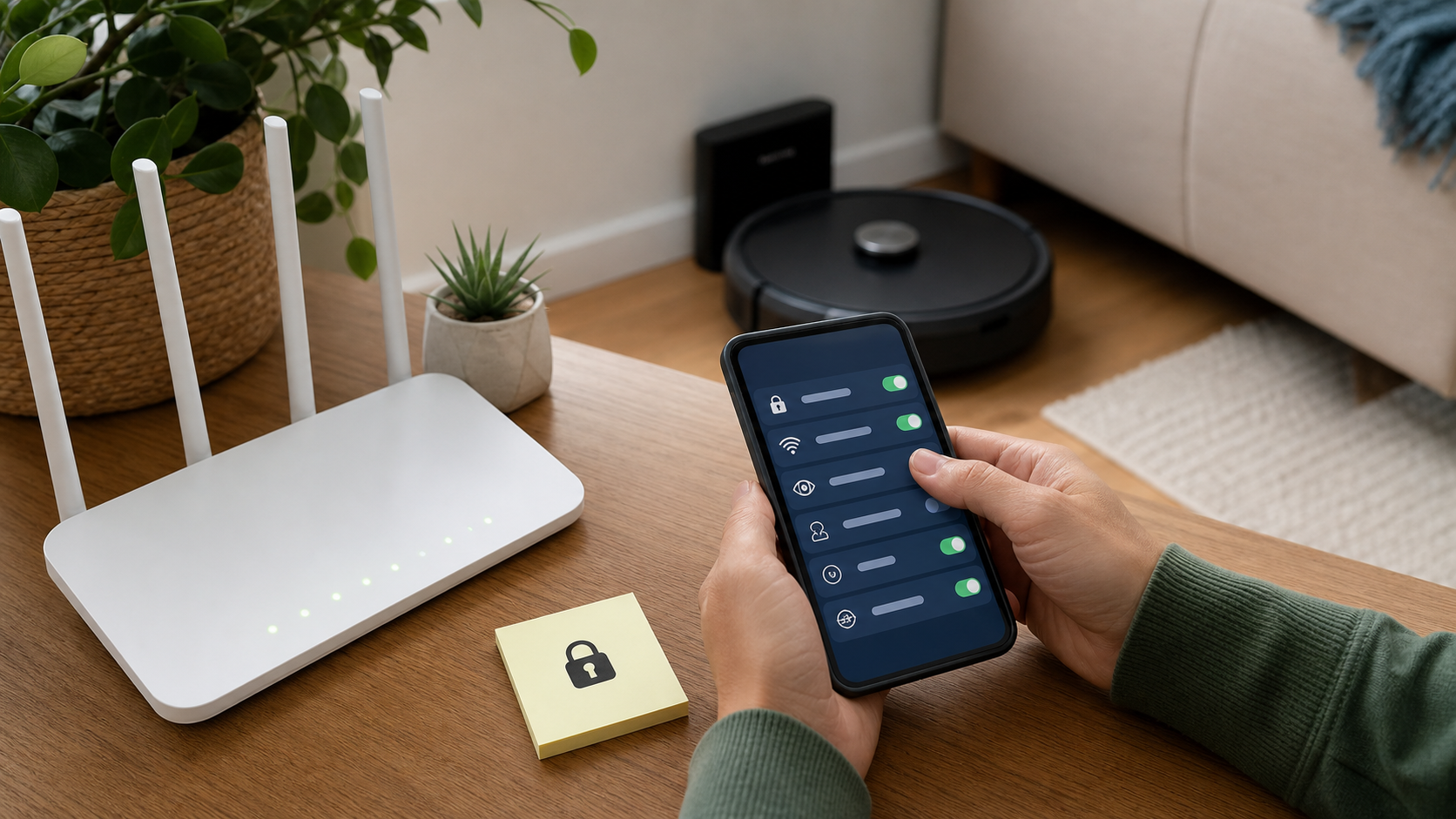
Robot vacuum privacy is not only about the person who bought the device. A home map can describe everyone who lives there. That includes children, roommates, guests, caregivers, house cleaners, and partners who may not have agreed to a connected map of the home.
In a family home, think carefully before naming rooms after children or mapping spaces where children sleep, change, or play. In a shared apartment, tell roommates what the vacuum can see and which rooms it enters. In a rental or guest space, avoid leaving a cloud-connected robot vacuum active in private areas unless guests clearly understand what it does. In a home with domestic safety concerns, custody conflict, stalking risk, or a tense roommate situation, remote access and map visibility deserve extra care.
This is not about making ordinary cleaning awkward. It is about remembering that a mobile device in a shared home can affect people who never opened the app. The respectful default for robot vacuum privacy is to collect less, label less, and avoid sensitive rooms unless the cleaning need is clear.
When A Simpler Robot Vacuum Is The Better Privacy Choice
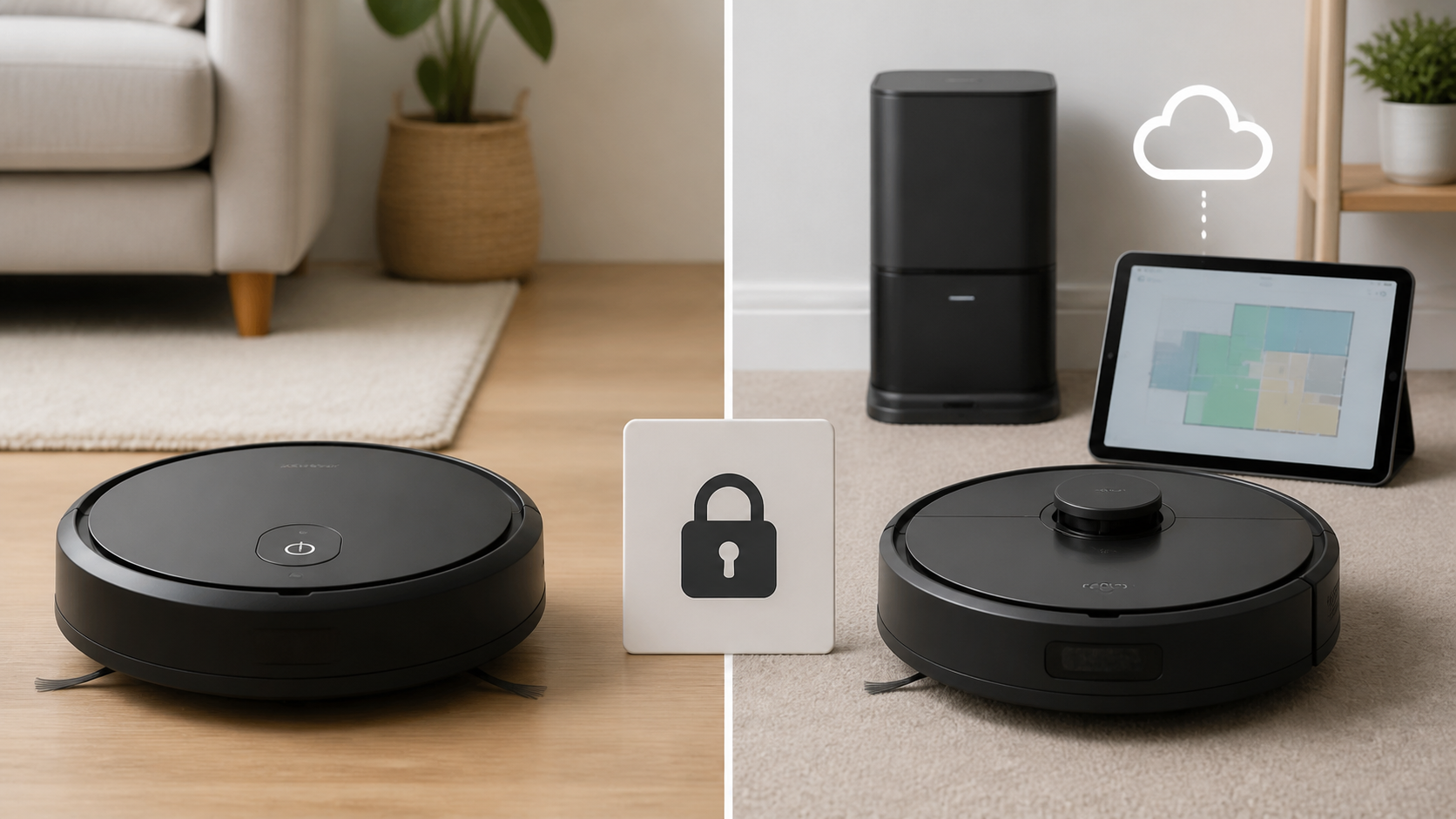
Advanced mapping can be useful, but feature count is not the same as value. A simpler robot vacuum may be the better robot vacuum privacy choice if the home is small, the floor plan is open, the household only needs whole-floor cleaning, or the owner does not want another cloud account.
Basic models can be frustrating. They may clean in less efficient paths, miss spots, run longer, or need more rescues from cords and rugs. But they may also collect less useful information about the home. For an apartment, a simple whole-room cleaner may solve the actual cleaning problem with better robot vacuum privacy than saved maps, camera images, or app routines.
Advanced mapping may be worth it when the cleaning need is more specific. A larger home may benefit from room-by-room cleaning. Someone with mobility limitations may need app control. A pet household may need obstacle avoidance. A multi-floor home may need saved maps. A household with fragile objects may need no-go zones. In those cases, the privacy answer is not “buy worse technology.” The answer is to buy the features that solve the real problem and turn off the rest.
A good robot vacuum privacy test is simple: if the feature disappeared tomorrow, would you miss it? If not, do not give it data.
What To Do Now If You Already Own One
If a robot vacuum is already in the house, do a short robot vacuum privacy audit before the next cleaning cycle.
Open the app and look at every saved map. Delete maps for old homes, old floors, temporary layouts, or rooms the robot no longer cleans. Rename rooms and zones in generic language. If a map includes a room that should stay private, decide whether the vacuum should be blocked from that room or whether the map should be rebuilt without it.
Review cleaning history. If the app keeps months of missions, decide whether that history is useful. Some owners like it for maintenance and troubleshooting. Others do not need long-term logs. If the app lets you delete or shorten history, use that setting.
Check camera, microphone, speaker, obstacle image, and remote viewing options. Turn off features that do not solve a current problem. If the robot has a camera but you do not use live view, disable live view if possible. If obstacle images are used for product improvement, decide whether you want to participate. If voice assistant integration is enabled but rarely used, remove it.
Update the robot, dock, and app. Then check the account. Change the password if it is reused anywhere else. Turn on two-factor authentication if available. Remove old users, old phones, old tablets, and old integrations. Check whether the app shows login history or active sessions.
Then decide whether the robot should stay online. Some households may choose to keep app control because it is genuinely useful. Others may decide the physical clean button is enough. Robot vacuum privacy improves when the connection has a reason.
If The Vacuum Behaves Strangely Or Someone Accessed It
A robot vacuum that starts unexpectedly, speaks unexpectedly, shows unknown users, streams video unexpectedly, changes maps, or moves in a way that seems remotely controlled should be treated as a security incident, not only a weird gadget moment.
The Verge reported in 2024, citing ABC News Australia and Ecovacs’ statement to that outlet, that someone gained access to Ecovacs Deebot X2 Omni robot vacuums in several U.S. cities, used speakers and remote control in disturbing ways, and that Ecovacs attributed the event to credential stuffing while saying an earlier PIN-bypass issue had been resolved in its Ecovacs robovac security report. For robot vacuum privacy, that example should not make people assume every robot vacuum is compromised. It should make people take account security and remote-control features seriously.
If something happens, stop the robot and disconnect it from Wi-Fi. Change the robot vacuum account password from a trusted phone or computer. Change the linked email account password too. Turn on two-factor authentication for both accounts if available. Remove unknown users, old phones, voice assistant links, and other integrations. Those robot vacuum privacy steps narrow the damage while you figure out what happened.
Preserve evidence before deleting everything. Save screenshots of alerts, users, maps, sessions, support chats, emails, unusual cleaning missions, video activity, or device history. Write down dates and times. Contact the vendor and ask direct questions: was there an unfamiliar login, a known vulnerability, a firmware update, a credential-stuffing event, or a way to revoke every session?
If the behavior involves threats, harassment, stalking, domestic safety, custody conflict, or a child-safety concern, contact law enforcement. If account compromise is part of a larger pattern, Quantum Cyber AI’s Privacy & Identity Protection hub can help organize the next steps for connected accounts and personal data.
Before You Sell, Gift, Or Recycle A Robot Vacuum
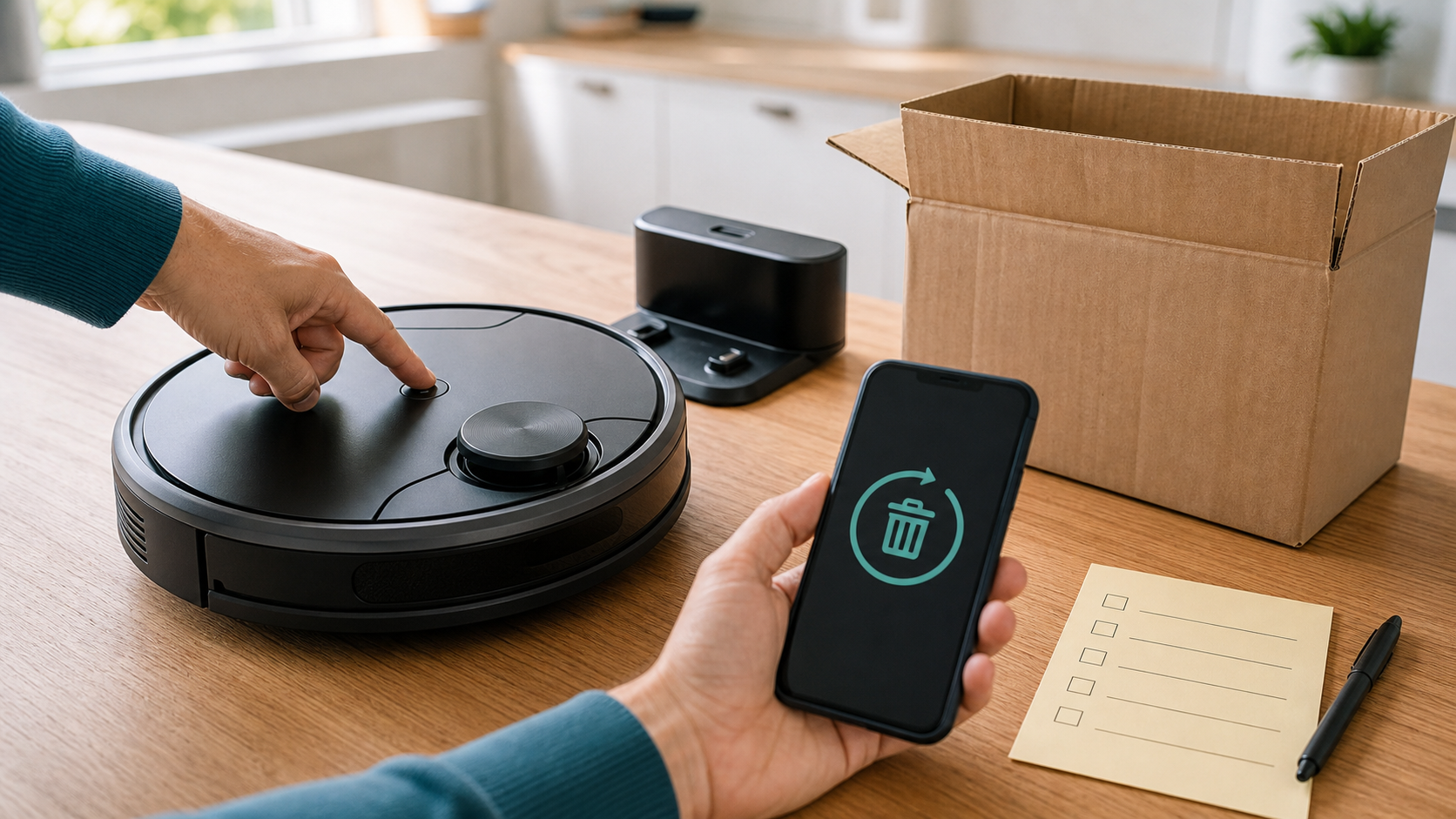
A robot vacuum should not leave the home with the home’s map still inside it. Treat it like a phone, tablet, or smart speaker: remove the account, delete stored data, and reset it before anyone else gets it.
Start in the app. Delete maps, room labels, no-go zones, clean zones, obstacle images, cleaning history, and saved routines if the app allows it. Remove the robot from the account. Remove voice assistant, smart home, replenishment, and third-party integrations. If the vendor offers a data deletion request, use it when you no longer need the account.
Then factory reset the robot and dock according to the manufacturer’s instructions. Some docks or base stations have their own network connection, saved pairing state, or account unlinking step, so check the support instructions for both the robot and the dock. If the app lets you remove saved Wi-Fi networks, do that too. After resetting, confirm the robot no longer appears in the app and cannot be controlled from an old phone.
If you are gifting the vacuum to someone you know, give them a clean device, not your old household map. If you are selling it, assume the buyer is a stranger. If you are recycling it, do not assume broken hardware means inaccessible data. Robot vacuum privacy lasts until the data is actually removed.
How To Read A Robot Vacuum Privacy Policy Without Losing The Plot
Privacy policies are not fun reading, but a few words matter. Search the policy for “map,” “floorplan,” “room,” “camera,” “image,” “object,” “microphone,” “voice,” “Wi-Fi,” “third party,” “advertising,” “retention,” “delete,” and “share.” You are not trying to become a lawyer. You are trying to learn whether the company explains robot vacuum privacy in plain language.
Look for whether map data is required or optional. Look for whether obstacle images are sent for product improvement. Look for whether people may review images or sensor data. Look for whether the company separates account identity from device environment data. Look for deletion controls. Look for data retention. Look for whether the company shares information with smart home partners, advertising services, analytics providers, or affiliates.
If the policy is too vague to answer basic questions, count that as part of the product. A great sale price does not fix a company that will not explain what it does with a map of your home.
The Washington Post’s 2025 robot vacuum privacy analysis noted the broader buyer problem: robot vacuums may capture floor plans, locations, images of people or pets, and connected-app information, while U.S. privacy and security protections remain uneven in its robot vacuum privacy and security analysis. That does not mean shoppers are powerless. It means shoppers should reward products that explain robot vacuum privacy practices clearly and punish products that hide behind vague claims.
A Practical Robot Vacuum Privacy Checklist
Use this checklist before buying or after setup:
- Choose the simplest model that solves the cleaning problem.
- Avoid camera or microphone models unless those features are truly useful.
- Confirm whether basic cleaning works without Wi-Fi.
- Use a unique account password.
- Turn on two-factor authentication when available.
- Secure the linked email account.
- Keep the robot, dock, app, and router updated.
- Rename rooms and zones in generic language.
- Delete maps, images, and history you do not need.
- Turn off obstacle image sharing unless you choose to participate.
- Disable remote viewing, microphones, speakers, and voice assistant links when unused.
- Remove old users, old phones, and old integrations.
- Review app permissions on every phone.
- Place smart devices on a separate network when your router supports it.
- Factory reset the robot and delete maps before resale, gifting, or recycling.
The goal is not to make a robot vacuum inconvenient. For robot vacuum privacy, the goal is to keep the data path as narrow as the cleaning job allows.
Conclusion
Robot vacuums can be genuinely useful. They can reduce chores, help people with mobility limits, keep pet hair under control, and make daily cleaning easier. But a map of a home is not just cleaning data. It can describe the structure of private life.
The safest robot vacuum privacy setup starts with a simple question: what does this device need to know to do the job? If whole-floor cleaning is enough, a simpler model may be the best fit. If advanced mapping is worth it, protect the account, limit map detail, turn off unused camera and cloud features, review app permissions, and delete data before the device leaves the home.
Good privacy is not about rejecting helpful tools. It is about making sure the tool does not quietly learn more about the household than the household meant to share.
For practical smart-home and privacy checklists as new devices arrive, subscribe to Quantum Cyber AI.
FAQ
Do robot vacuums really store maps of your home?
Many advanced robot vacuums can store maps of a home, especially models that support room-by-room cleaning, no-go zones, multiple floors, or app-based map editing. Some maps may stay local, while others may be linked to a cloud account or transmitted depending on the model and settings. Check the app and privacy policy for map storage, sharing, and deletion controls.
Is LiDAR safer than a camera on a robot vacuum?
LiDAR is not automatically private, but it usually does not create ordinary camera images of the home. Camera models deserve extra scrutiny because images, obstacle recognition, remote viewing, or home-monitoring features can expose more sensitive information. The safer choice depends on the model’s settings, data handling, update support, and whether you need the camera feature at all.
Can a robot vacuum work without Wi-Fi?
Some robot vacuums can still perform basic cleaning without Wi-Fi, often through a physical button on the device. You may lose app scheduling, room selection, map editing, no-go zones, remote start, updates, and advanced features. Check the manual before buying if offline operation matters to you.
What should I turn off first in a robot vacuum app?
Start with unused camera, microphone, speaker, remote-viewing, obstacle-image-sharing, cloud-history, and voice-assistant features. Then review map labels, cleaning history, shared users, old phones, third-party integrations, and phone app permissions. Use a unique password and two-factor authentication if the app supports it.
Should I avoid robot vacuums with cameras?
Not always. A camera can help a robot avoid cables, pet waste, shoes, and other obstacles. But if you do not need that feature, skipping it can reduce privacy risk. If you buy a camera model, check whether image sharing is optional, whether remote viewing can be disabled, whether there is an indicator or shutter, and whether the company explains how images are stored and deleted.
What should I do before selling a used robot vacuum?
Delete maps, room labels, cleaning history, obstacle images, schedules, and no-go zones. Remove the robot from your account, disconnect voice assistant and smart home integrations, request data deletion if appropriate, and factory reset the robot and dock. Confirm the device no longer appears in your app before giving it to someone else.